Electrical Inspection for Insurance: What Insurers Check
By B&M Electric December 4, 2025
Electrical inspection for insurance: Secure 2025
Why Insurance Companies Demand Electrical Inspections
An electrical inspection for insurance is a standard requirement for many homeowners, particularly for older properties or when changing insurers. These inspections allow companies to evaluate your home’s fire risk before offering coverage.
Key Requirements for Electrical Insurance Inspections:
- Minimum service size: 100 amps (most insurers won’t cover less)
- Panel types: No Federal Pacific or Zinsco panels allowed
- Wiring: Copper preferred; aluminum and knob-and-tube often require remediation
- Safety devices: GFCI protection in wet areas, working smoke detectors
- Documentation: Certificate of inspection or letter of compliance required
Insurers are cautious for good reason: failing or malfunctioning electrical equipment accounts for 13% of residential fires, a leading cause of house fires. An inspection is a preventative measure against costly claims.
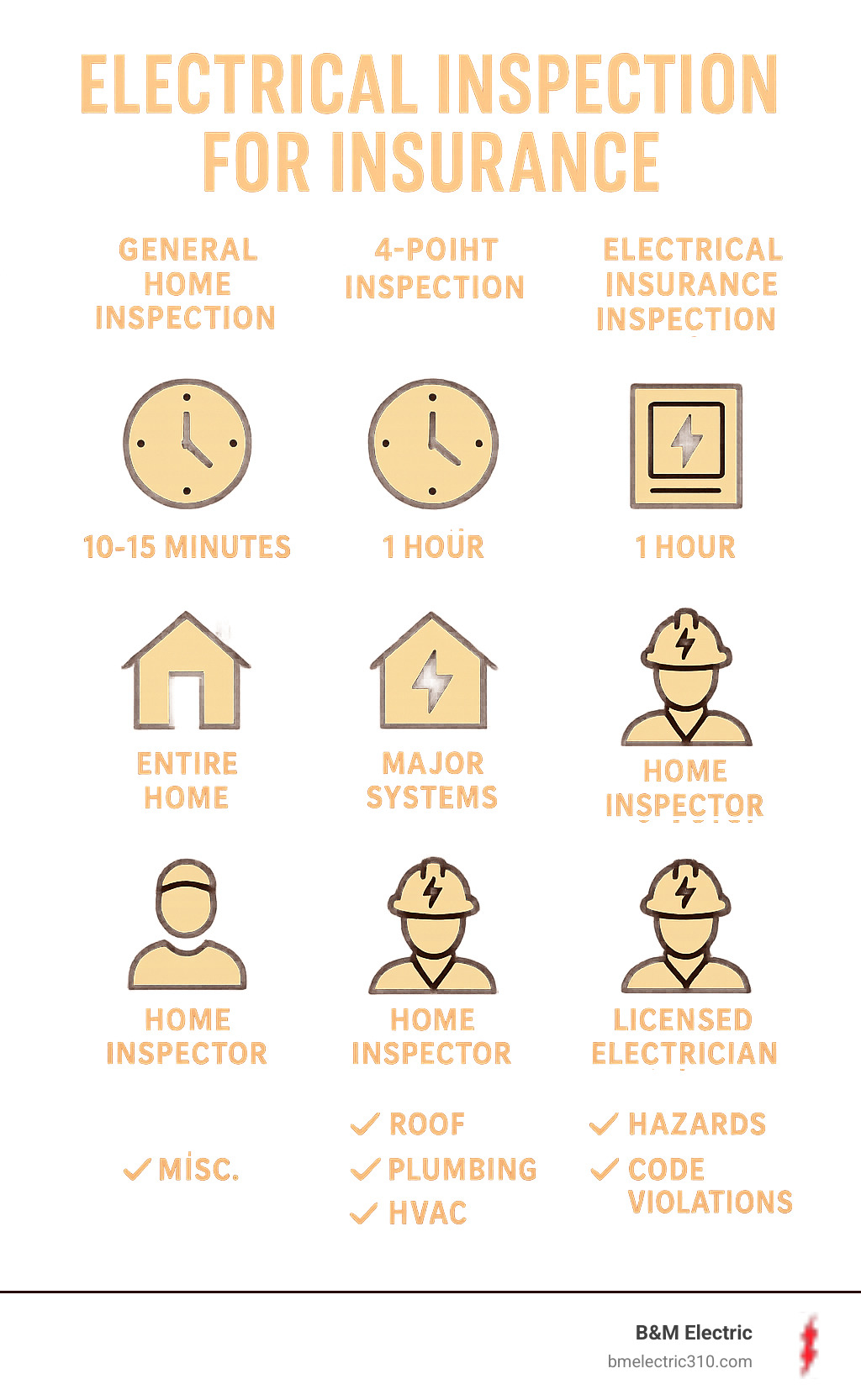
This inspection is far more detailed than a general home inspection. A licensed electrician thoroughly evaluates your entire system for safety hazards and code violations, a process that goes well beyond a generalist’s brief review of the panel.
Insurers often require inspections for homes over 30 years old, when you’re buying a home, switching providers, or after an electrical-related claim.
Why Insurers Require Electrical Inspections
Insurance companies calculate risk to keep your home safe while protecting their business. When they require an electrical inspection for insurance, it’s a crucial part of this process, not an attempt to make your life difficult.
Since failing or malfunctioning equipment is the second-leading cause of electrical fires in homes, insurers use these inspections to mitigate risk by identifying fire hazards early. The inspection results help determine your policy eligibility and calculate your premiums. A well-maintained, up-to-code system signals lower risk, which can lead to more favorable rates, while identified hazards may increase premiums or require fixes before coverage begins.
When an Inspection is Typically Triggered
Your insurer will likely request an inspection in specific situations:
- Home purchases, especially of older properties, as part of their due diligence.
- Policy renewals, particularly when a home reaches a certain age or underwriting guidelines change.
- Older homes, typically those 30+ years old, are prime candidates. Some insurers start as early as 23 years because older systems have a higher likelihood of outdated components.
- After filing a claim related to electrical problems, to ensure underlying issues are resolved.
- Rental properties face extra scrutiny due to tenant safety and liability concerns.
- Mortgage requirements can also trigger an inspection if the lender requires proof of adequate insurance.
For more on proactive safety, see our Tips to Ensure Home Electrical Safety.
How Inspection Requirements Vary
While the goal is always safety, specific requirements for an electrical inspection for insurance vary by location and property type.
- Jurisdiction differences: Requirements in California’s South Bay differ from those in other regions. For example, Florida’s 4-point inspection covers the roof, HVAC, plumbing, and electrical systems, while Ontario requires ESA letters from its Electrical Safety Authority.
- Type of inspection: A general home inspection is a broad overview. A 4-point inspection focuses on the four major systems. A dedicated electrical insurance inspection is a deep dive performed by a licensed electrician.
- Detached homes versus condos: A detached home inspection covers the entire system. For a condo, the inspection is typically limited to the unit’s sub-panel and internal wiring, as the HOA manages common areas.
- Landlord requirements: These are often stricter due to the higher liability associated with tenant safety.
Understanding these variations helps you prepare for the right type of inspection for your situation.
What to Expect During an Electrical Inspection for Insurance
When we conduct an electrical inspection for insurance, our team performs a thorough, visual assessment of accessible electrical components, using non-invasive testing to identify safety hazards or code violations. We use a reasonable sampling approach, focusing on accessible components to assess the system’s overall condition and safety for insurance purposes.
The Main Electrical Panel and Service
The main service panel is a top priority. We examine:
- Service Size: Insurers typically require a minimum 100-amp service. A 60-amp service is often flagged as inadequate and hazardous.
- Panel Brand and Condition: Federal Pacific Electric (FPE) Stab-Lok and Zinsco panels are known fire hazards and are commonly uninsurable. Replacement is almost always required. These issues are a key sign you may need an Electrical Panel Upgrade.
- Breakers vs. Fuses: Fuse panels may be insurable if they meet certain conditions, such as proper fuse sizing, but replacement is often necessary.
- Overloaded Circuits & Double-Tapped Breakers: We look for double-tapped breakers (two wires on a terminal meant for one) and oversized breakers (e.g., a 30A breaker on a 15A wire), which are serious fire risks.
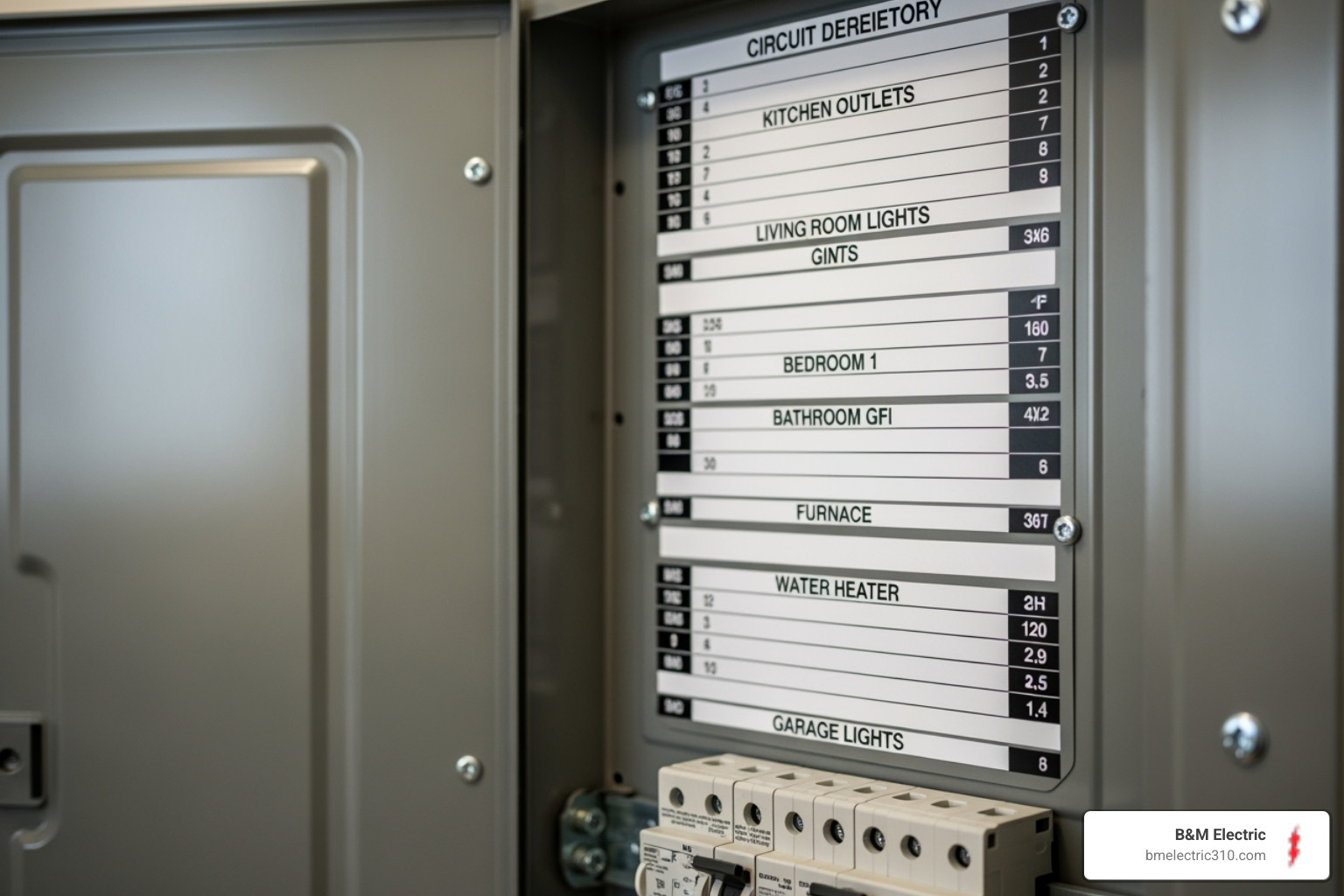
- Panel Labeling: A clear circuit directory is a safety feature. We also check for missing filler plates that can expose live components.
Wiring Systems and Conditions
The type and condition of your home’s wiring are critical. We assess all visible wiring for fire hazards.
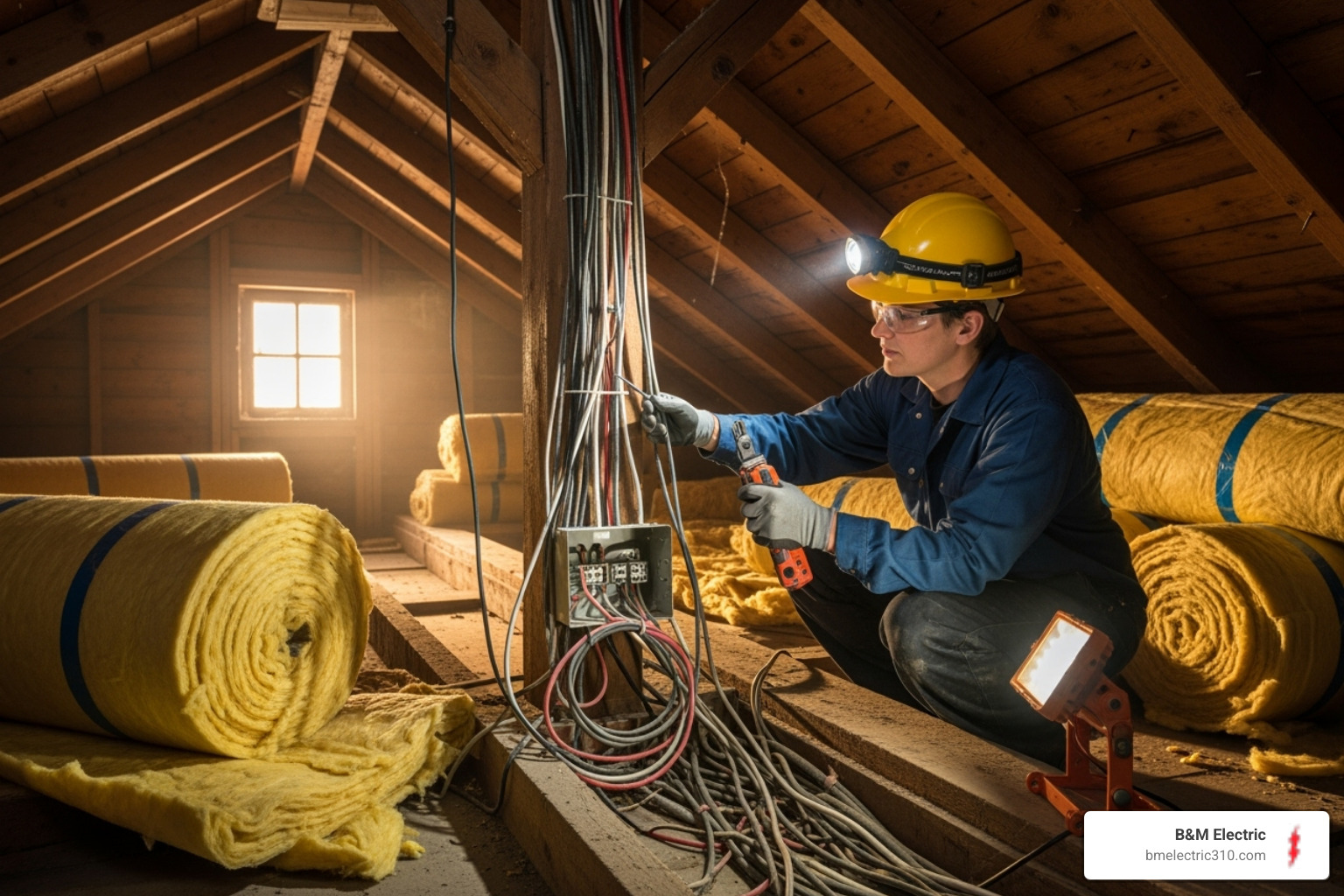
- Knob-and-Tube Wiring: Found in pre-1940s homes, this wiring is a major red flag for insurers. It lacks a ground wire and has brittle insulation. Most insurers refuse coverage for homes with active knob-and-tube wiring, requiring full replacement.
- Aluminum Branch Wiring: Common in homes from the mid-1960s to mid-1970s, this wiring is another significant concern due to fire hazards from loose connections. Many carriers will not insure it unless it’s replaced with copper or remediated with approved connectors like COPALUM or AlumiConn pigtails.
- Exposed Splices & Open Junction Boxes: All electrical connections must be inside covered junction boxes to prevent shock and fire hazards.
- Brittle Insulation & Corrosion: We check for deteriorating insulation and corrosion, which can indicate moisture issues or poor connections, common Electrical Problems in Palos Verdes Homes.
Safety Devices and Grounding
Modern safety devices are crucial for protecting your home.
- GFCI and AFCI Protection: Ground Fault Circuit Interrupters (GFCIs) prevent shock, while Arc Fault Circuit Interrupters (AFCIs) prevent fires. Insurers expect GFCI protection in wet locations (kitchens, bathrooms, garages, exteriors) and often push for AFCI upgrades in living areas. If you have GFCI Outlets That Keep Tripping, it may signal an underlying problem.
- Grounding and Bonding: A properly grounded system is essential for safety. We inspect the grounding electrode system and ensure metal water and gas lines are bonded to it.
- Smoke and CO Detectors: Insurers verify that these life-safety devices are present, properly placed, and functional.
- Surge Protection: A whole-home surge protective device (SPD) at your panel is viewed favorably by insurers as it reduces the risk of claims from power surges.
How to Prepare and Pass Your Inspection
Preparing for your electrical inspection for insurance can streamline the process and increase your chances of passing. For insurance purposes, you need a licensed electrician who understands what insurers look for, not a general home inspector. When Hiring Reliable Electrical Contractors, always verify their experience with insurance inspections.
Pre-Inspection Checklist for Homeowners
- Clear access: Ensure all electrical panels, sub-panels, and the outdoor meter are easily accessible. Move any furniture or storage blocking them.
- Test detectors: Test your smoke and carbon monoxide detectors. Replace batteries and any expired units.
- Label circuits: A neatly labeled panel directory is helpful and shows you maintain your system.
- Gather documentation: Have any permits or receipts from recent electrical work ready.
Consider tackling some Essential Electrical Maintenance before the inspection to prevent small issues from becoming failures.
Common Deficiencies and How to Fix Them
Certain issues frequently cause inspection failures. Addressing them beforehand can save time and hassle.
- Outdated Panels: Federal Pacific (FPE) and Zinsco panels are uninsurable fire hazards and must be replaced.
- Old Wiring: Knob-and-tube wiring almost always requires complete replacement. Aluminum branch wiring needs professional remediation (e.g., COPALUM connectors) or replacement with copper.
- Missing Safety Devices: Lack of GFCI protection in wet areas (kitchens, baths, exteriors) and AFCI protection in living areas are common flags.
- Grounding Issues: An improper or missing grounding system is a major safety violation.
- Improper Breakers: Double-tapped or oversized breakers create fire hazards and must be corrected by a professional.
For any of these issues, professional Electrical Repairs for a Safe Home are non-negotiable. Insurance companies require proof that work was done by a licensed electrician.
Understanding the Scope of an Electrical Inspection for Insurance
An electrical inspection for insurance is a visual assessment of accessible components. We cannot inspect wiring hidden behind walls without destructive measures. We use a “sampling approach,” checking representative outlets and switches to assess the system’s overall safety and compliance, not to test if every single device works. Our reports are comprehensive, designed for insurance underwriters, and provide clear, actionable recommendations. This focus on systemic safety is why our Electrical Inspection Docs and Reports meet insurer requirements.
After the Inspection: Results and Next Steps
After your electrical inspection for insurance, you’ll receive a detailed report outlining your system’s health. The outcome typically falls into one of three categories:
- Pass: Your system meets safety standards, and you’ll receive the documentation needed for coverage.
- Conditional: Minor issues were found that need to be addressed, usually within 30 to 90 days.
- Fail: Significant safety hazards, like Federal Pacific panels or active knob-and-tube wiring, were identified. Insurers will not provide coverage until these are resolved.
For a conditional or fail result, we’ll help you prioritize the necessary repairs to make your home safe and insurable. After the work is done, a reinspection provides the updated documentation for your insurer. Addressing deficiencies often leads to standard rates, while ignoring them can result in higher premiums, coverage exclusions, or policy cancellation. This highlights the Importance of Electrical Inspections for both safety and insurability.
Interpreting Your Report and Taking Action
Your goal is to obtain a letter of compliance or a certificate of inspection. This document from a licensed electrician is your proof to the insurer that your system is safe. It will detail the property, inspection date, safety status, and any repairs performed.
Insurers require permanent, code-compliant repairs, not temporary fixes. For significant work like panel replacements, local permits are usually required. This adds another layer of safety and verification, giving your insurer extra confidence. We handle the permit process as part of our service. When choosing a contractor, our guide on Questions to Ask Electrical Contractors can help.
Navigating the Insurance Approval Process
Once repairs are complete and you have the updated documentation, the final step is securing approval.
- Submit documentation promptly. Digital submission is usually fastest.
- Communicate with your insurance agent. They are your ally and can guide you through their company’s specific procedures.
- Follow up if needed. A polite call can keep the process moving.
Most importantly, avoid coverage jeopardy. Missing deadlines, hiding known issues, or attempting unpermitted DIY work can compromise your policy. Professional Electrical Inspections Safeguarding Home security and insurability is the only reliable path.
Frequently Asked Questions about Electrical Inspections for Insurance
Homeowners often have questions about electrical inspection for insurance requirements. Here are answers to the most common concerns.
How much does an electrical insurance inspection cost and how long is it valid?
The cost depends on your home’s size and the complexity of its electrical system. Think of it as an investment in safety and insurability. The inspection itself typically takes a few hours.
An inspection report’s validity is determined by your insurance company, but most prefer reports from the last 2 to 5 years. If you’re buying an older home or switching insurers, a fresh inspection will almost certainly be required.
Can I switch insurance companies to avoid an inspection?
While tempting, this strategy is risky. Underwriting guidelines vary, but an insurer that doesn’t require an inspection today might do so at renewal. More importantly, if you know about electrical issues and fail to disclose them to a new insurer, they can deny future claims or cancel your policy for non-disclosure.
An electrical inspection for insurance is about safety. Hazards don’t disappear by switching companies. Addressing issues head-on provides peace of mind that is far more valuable than the temporary convenience of avoiding an inspection.
What simple fixes can I do myself before an inspection?
Proactive homeowners can perform a few simple tasks before we arrive for your electrical inspection for insurance.
- Change batteries in all smoke and carbon monoxide detectors and test them.
- Clear access to all electrical panels and the meter.
- Replace broken outlet covers or switch plates.
However, any work involving wiring or breakers must be left to a licensed professional. As one expert puts it, “This is no place for the do it yourselfer”. Electrical work is dangerous, and DIY repairs can void your insurability, even if they seem correct. Trust a professional for all electrical repairs to ensure safety and compliance.
Conclusion
Caring for your home’s electrical system is about protecting your family and your investment. When an insurer requests an electrical inspection for insurance, they are partnering with you to prevent electrical fires and ensure your home is safe.
Think of this inspection as a critical health checkup for your home. A proactive approach saves you from costly repairs, insurance headaches, and dangerous situations. Investing in your home’s electrical safety provides priceless peace of mind and preserves its long-term value.
At B&M Electric, we guide you through every step, from the initial inspection to any necessary repairs. With 50 years of experience in the South Bay, we know what local insurers require and ensure your home meets those standards with precision and care.
Don’t wait for a deadline or an emergency. Taking action now ensures your electrical system is protecting your home, not putting it at risk.
Ready to take the next step? Schedule your electrical inspection today and let our experienced team help you keep your home safe, compliant, and well-protected.