Shock-Proof Your Business: A Guide to Workplace Electrical Safety
By B&M Electric December 8, 2025
Electrical safety for businesses: Shock-Proof 2025
Why Electrical Safety for Businesses Matters More Than Ever
Electrical safety for businesses is crucial for protecting lives and your bottom line. With over 20,000 workers injured in workplace electrical accidents over the past decade, the stakes couldn’t be higher.
Quick Answer: Essential electrical safety for businesses includes:
- Risk Assessment – Identify electrical hazards in your workplace
- Regular Inspections – Check equipment, cords, and systems routinely
- Employee Training – Ensure workers recognize and avoid electrical dangers
- Proper Equipment – Use certified, well-maintained electrical devices
- Emergency Plans – Know how to respond to electrical incidents
- Professional Maintenance – Schedule regular inspections by qualified electricians
The financial impact is staggering, with equipment breakdowns costing businesses anywhere from $36,000 to $2.3 million per hour in lost operations. Beyond the numbers, business owners have a moral obligation to ensure their employees go home safely each day.
As safety experts remind us, “Electricity is safe and reliable, but it can be hazardous if misused.” The good news is that most electrical accidents are preventable with the right knowledge and practices.
Whether you run a small office or a large industrial facility, understanding electrical safety is essential for protecting your people, property, and profits.
Understanding the Stakes: Key Hazards and Regulations
Electricity powers your business, but it can be incredibly dangerous. At B&M Electric, with 50 years of experience in the South Bay, we’ve seen how minor electrical issues can become major disasters. Understanding these risks is essential for protecting your people and your business.

Primary Electrical Hazards Businesses Face
You often can’t see electrical hazards coming. An outlet that looks fine might hide loose wiring, or an extension cord could have hidden damage.
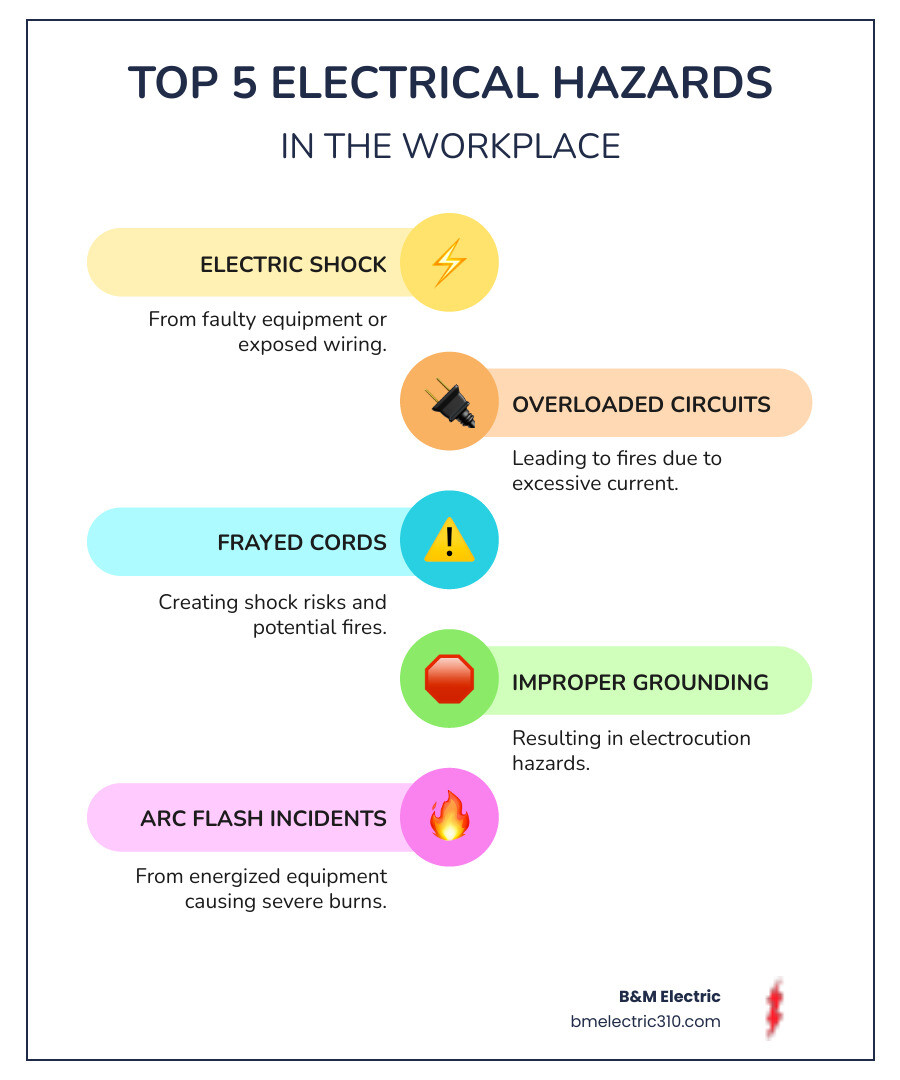
- Electric shock and electrocution are top dangers. Current passing through the body can cause muscle contractions, cardiac arrest, or secondary injuries from falls.
- Arc flash incidents are explosive events where electrical current jumps through the air, creating intense heat (up to 35,000°F), light, and pressure that cause severe burns and other injuries.
- Electrical fires, often caused by overloaded circuits, frayed cords, or damaged equipment, can spread rapidly.
- Explosions can be triggered by electrical sparks in environments with flammable gases, vapors, or dust.
- Improper grounding can energize metal surfaces like machinery or filing cabinets, creating a hidden shock hazard.
Most of these hazards are preventable with proper attention and maintenance, making electrical safety for businesses essential for daily operations.
Legal and Regulatory Requirements for Electrical Safety for Businesses
Business owners must understand that electrical safety for businesses is not optional—it’s the law. These regulations exist to protect your employees and your operations.
Key regulations include OSHA (Occupational Safety and Health Administration) standards, which mandate a workplace free from recognized electrical hazards. The National Fire Protection Association (NFPA) provides the foundational codes, including the National Electrical Code (NEC) for safe installations and the NFPA 70E® Standard for Electrical Safety for safe work practices. Compliance with these standards, along with local building codes, is essential.
Beyond legal obligations, there’s a moral one. As one safety expert put it, business owners must give employees “the things they need to be able to do their jobs safely and go home to their families.” After five decades in this business, we couldn’t agree more. Meeting these requirements isn’t just about avoiding fines—it’s about creating a safe workplace.
For more insights, check out our guide on Electrical Warning Signs to Watch For.
A Blueprint for Electrical Safety for Businesses
An effective electrical safety for businesses program requires ongoing attention, not a one-time setup. Most accidents stem from human error, not dramatic equipment failures, making a systematic approach essential to protect your people and operations.
Key Components of an Effective Electrical Safety Program
An effective program fits together like a puzzle, with each piece being critical.
- Written Safety Policies: A clear guide for handling electrical situations and emergencies.
- Hazard Identification and Risk Assessment: Evaluating equipment, tasks, and the environment to identify potential dangers.
- Risk Control Procedures: Implementing measures like Ground-Fault Circuit Interrupters (GFCIs), safe work practices, and personal protective equipment (PPE) to mitigate identified risks.
- Lockout/Tagout (LOTO): A critical procedure to ensure equipment is de-energized during maintenance.
- Employee Training: Ensuring all workers can recognize hazards and follow safe practices.
- Program Audits: Regular reviews to identify gaps and continuously improve the program.
The NFPA’s “Electrical Cycle of Safety™” combines proper installation (NEC), maintenance (NFPA 70B), and workplace practices (NFPA 70E® Standard for Electrical Safety). Learn more in our guide on Electrical Maintenance Explained.
Proper Installation, Maintenance, and Inspection
Most electrical problems start long before they’re noticed. The three pillars of electrical system health—installation, maintenance, and inspection—are your best defense.
- Proper Installation: All work must be done by qualified electricians who understand NEC requirements to prevent future problems. DIY work often leads to costly and dangerous issues.
- Routine Inspections: Regular visual checks by employees and periodic comprehensive inspections by a professional electrician are crucial for early detection of issues like overheating or loose connections.
- Preventive Maintenance: Following standards like NFPA 70B, regular servicing of equipment prevents major breakdowns.
- Certified Equipment and GFCIs: Always use UL-certified equipment. Install Ground-Fault Circuit Interrupters (GFCIs) in wet or damp locations to protect against electric shock.
Professional inspections can catch problems before they become emergencies. Learn more in our article on how Electrical Inspections Prevent Issues.

Preventing Common Electrical Hazards
Most workplace electrical accidents are caused by everyday hazards that are easy to prevent with good habits.
- Extension Cords: Use only for temporary needs. Check for damage before use, ensure they are rated for the load, and never run them under rugs or through walls. Pull the plug, not the cord.
- Avoid Daisy-Chaining: Never plug power strips or extension cords into one another, as this can overload circuits and create a fire hazard.
- Circuit Load Management: Watch for signs of overloaded circuits, like dimming lights or frequently tripped breakers. Power strips don’t increase a circuit’s capacity.
- Cord and Plug Checks: Visually inspect cords and plugs before use. Unplug equipment when not in use to save energy and reduce fire risk.
- Proper Storage: Keep electrical equipment clean and dry to prevent overheating and short circuits.
- Water and Electricity: Keep liquids away from electrical equipment and use GFCI-protected outlets in all damp locations.
Advanced Protection: Managing High-Risk Scenarios and Training
Advanced electrical safety for businesses involves specialized knowledge for high-risk environments. It’s about creating layers of protection through training, equipment, and planning. With the right procedures, even high-risk work can be done safely.
Best Practices for Employee Training
An effective training program is essential for a safe workplace. If employees don’t understand their role, even the best safety program can fail.
- Qualified vs. Unqualified Employees: A core concept in OSHA and NFPA 70E standards. Qualified persons are trained to recognize and avoid electrical hazards, while unqualified persons are not and must maintain a safe distance from energized parts.
- Hazard Recognition: All employees should be trained to spot potential electrical dangers, like frayed cords or overloaded circuits, making them your first line of defense.
- Safe Work Practices: Training should cover basics for all staff and advanced procedures, including Lockout/Tagout (LOTO), for qualified workers.
- Emergency Procedures: Everyone must know how to respond to an electrical incident, including who to call and how to shut off power.
Hands-on training, regular refreshers, and thorough documentation are essential components of an effective training program. For more guidance, see our Electrical Safety Tips.
The Role of Personal Protective Equipment (PPE)
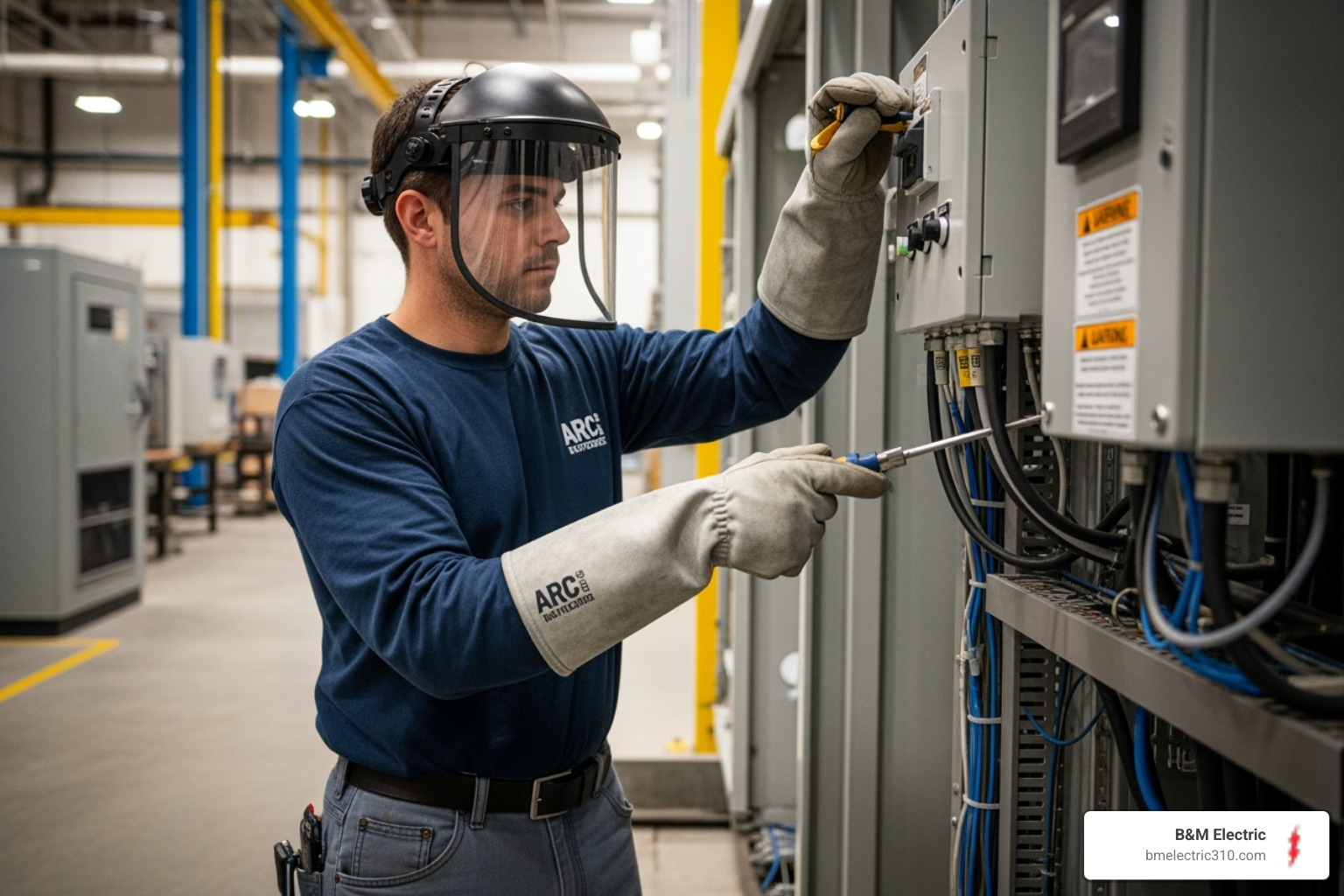
PPE is your last line of defense when hazards cannot be eliminated. Essential PPE includes insulated gloves, safety glasses, face shields, arc-rated clothing, voltage-rated tools, and insulated footwear.
- Proper Selection: PPE must be selected based on an arc flash risk assessment, as required by NFPA 70E, to match the specific hazard level.
- Inspection and Maintenance: Employees must inspect PPE before each use for any damage. It must be properly stored and maintained to ensure its life-saving effectiveness.
Managing Arc Flash and Other High-Risk Events
Arc flash incidents are among the most dangerous workplace hazards, producing temperatures hotter than the sun. Managing this risk requires careful planning.
- Arc Flash Risk Assessment: A comprehensive evaluation to identify potential arc flash hazards and determine the required safety measures.
- Hazard Boundaries: These establish safe distances from energized equipment (Limited, Restricted, and Arc Flash Boundaries) to protect workers.
- Warning Labels: Equipment must have labels indicating arc flash boundaries and required PPE.
- De-energizing and Work Permits: De-energizing equipment using LOTO procedures is always the safest method. Energized work is only allowed under specific, justified circumstances and requires a special permit.
Safety Considerations for Different Workplaces
Electrical safety for businesses varies by environment. A corporate office has different challenges than a construction site.
- Office Environments: Hazards include overloaded circuits and improper cord use. Focus on employee training and adequate outlet installation.
- Construction Sites: High-risk due to temporary wiring and changing conditions. Require frequent equipment inspections and mandatory GFCI use.
- Industrial Facilities: Involve high-voltage equipment and arc flash risks. Demand comprehensive risk assessments, detailed LOTO procedures, and specialized training.
- Retail Spaces: Must protect employees and customers from hazards like damaged wiring and overloaded circuits. Regular visual checks are key.
We can help you develop a safety plan for your specific needs with our Essential Commercial Electrical Services.
Fostering a Culture of Safety and Emergency Preparedness
The strongest form of electrical safety for businesses is a deeply ingrained culture where every team member is committed to protecting one another. This shared responsibility, from the CEO to the newest hire, is more effective than any manual.
Benefits of a Strong Electrical Safety Culture
A strong safety culture yields significant benefits: fewer injuries, increased productivity, and lower insurance costs. It also boosts employee morale and loyalty, as workers feel valued and secure. This proactive approach protects your assets and improves your company’s reputation. As a 2024 report by Siemens highlights, preventing equipment failures is crucial to avoiding the high cost of downtime.
As safety experts say, “safe work practices are vital to everyone in your business.” When management commitment meets employee engagement, safety becomes everyone’s responsibility.
Responding to Electrical Emergencies
While prevention is key, a clear and practiced emergency plan is crucial for managing incidents effectively. It can be the difference between a minor incident and a major tragedy.
- Power Outages: Stay calm. If it’s a tripped breaker, have a qualified person investigate before resetting it. Unplug sensitive electronics to prevent surge damage when power returns.
- Electric Shock: Do not touch the victim if they are still in contact with the electrical source. Immediately cut the power. If you can’t, use a non-conductive object (like a dry wooden stick) to separate the victim from the source. Call 911 immediately. Administer CPR if you are trained and it is needed.
- Electrical Fires: Never use water. Turn off the power if it’s safe to do so and use only a Class C fire extinguisher. If the fire is unmanageable, evacuate everyone immediately and call the fire department.
- Preparedness: Post emergency contacts (911, facility manager, trusted electrician) clearly. Ensure enough staff are trained in first aid and CPR, and conduct regular emergency drills.
Frequently Asked Questions about Workplace Electrical Safety
Here are answers to common questions we receive from business owners in Torrance and the South Bay about electrical safety for businesses.
How often should a business have its electrical system inspected?
The ideal frequency depends on your facility type, equipment age, and environment. A busy manufacturing plant requires more frequent inspections than a quiet office. A professional risk assessment is the best way to determine a suitable schedule.
While employees should perform daily visual checks for issues like frayed cords, a comprehensive inspection by a qualified electrician should be done periodically. For most businesses, this is at least annually. High-risk environments like construction sites may need quarterly inspections.
What is the difference between a qualified and an unqualified electrical worker?
This is a critical distinction defined by OSHA. A qualified person has the specific training and experience to identify electrical hazards and work safely on or near energized parts. They understand the risks and how to mitigate them.
An unqualified person lacks this specialized training and must stay clear of such hazards. Only qualified workers are permitted by OSHA to work on or near energized equipment, and they require ongoing training to maintain this status.
What is Lockout/Tagout (LOTO) and when is it required?
LOTO is a critical safety procedure for equipment that could cause injury if it started unexpectedly during maintenance or service. It involves physically locking the energy source in the ‘off’ position and placing a tag to warn others that the equipment is being serviced.
LOTO is required by law whenever an employee is exposed to any form of hazardous energy, including electrical, mechanical, or thermal. The procedure requires identifying all energy sources, isolating them, applying locks and tags, and verifying de-energization before work begins. It eliminates guesswork and keeps workers safe.
Protect Your People and Your Profits
When it comes to electrical safety for businesses, protecting your people is protecting your profits. Proactive safety measures reduce accidents, insurance claims, and costly downtime while boosting employee morale and your company’s reputation.
Most electrical problems are completely preventable. Regular inspections, proper training, and professional maintenance are the keys to keeping your operations running smoothly and safely.
At B&M Electric, we’ve spent 50 years helping Torrance businesses create safer, more reliable electrical environments. We’ve seen how the right approach transforms workplaces, making them not just safer, but better.
Professional expertise makes all the difference. While you focus on running your business, our licensed and insured electricians focus on keeping your electrical systems safe, compliant, and efficient. We bring the personal touch and precision you deserve, treating your business like our own.
The best time to address electrical safety is now. The long-term benefits of a strong safety culture compound over time, creating a workplace where electrical systems support your success.
Ready to take the next step? For a comprehensive assessment of your business’s electrical system, schedule a professional Electrical Inspection in Torrance. Let’s work together to create a safer, more profitable future for your business.