Power Up: A Guide to Electrical Panel Replacement
By B&M Electric December 1, 2025
Electrical service panel replacement: Your 2025 Guide
The Heart of Your Home’s Electrical System
Electrical service panel replacement involves replacing your home’s main electrical distribution hub, which safely delivers power from the utility to every circuit.
Key aspects of electrical service panel replacement:
- What it is: Replacing the breaker box that distributes electricity throughout your home
- When needed: Panel is 25+ years old, frequently trips breakers, or can’t handle modern electrical demands
- Typical upgrade: Moving from 100-amp to 200-amp service for modern homes
- Professional requirement: Must be done by licensed electricians due to high-voltage safety risks
- Timeline: Most replacements take 4-8 hours with temporary power shutdown
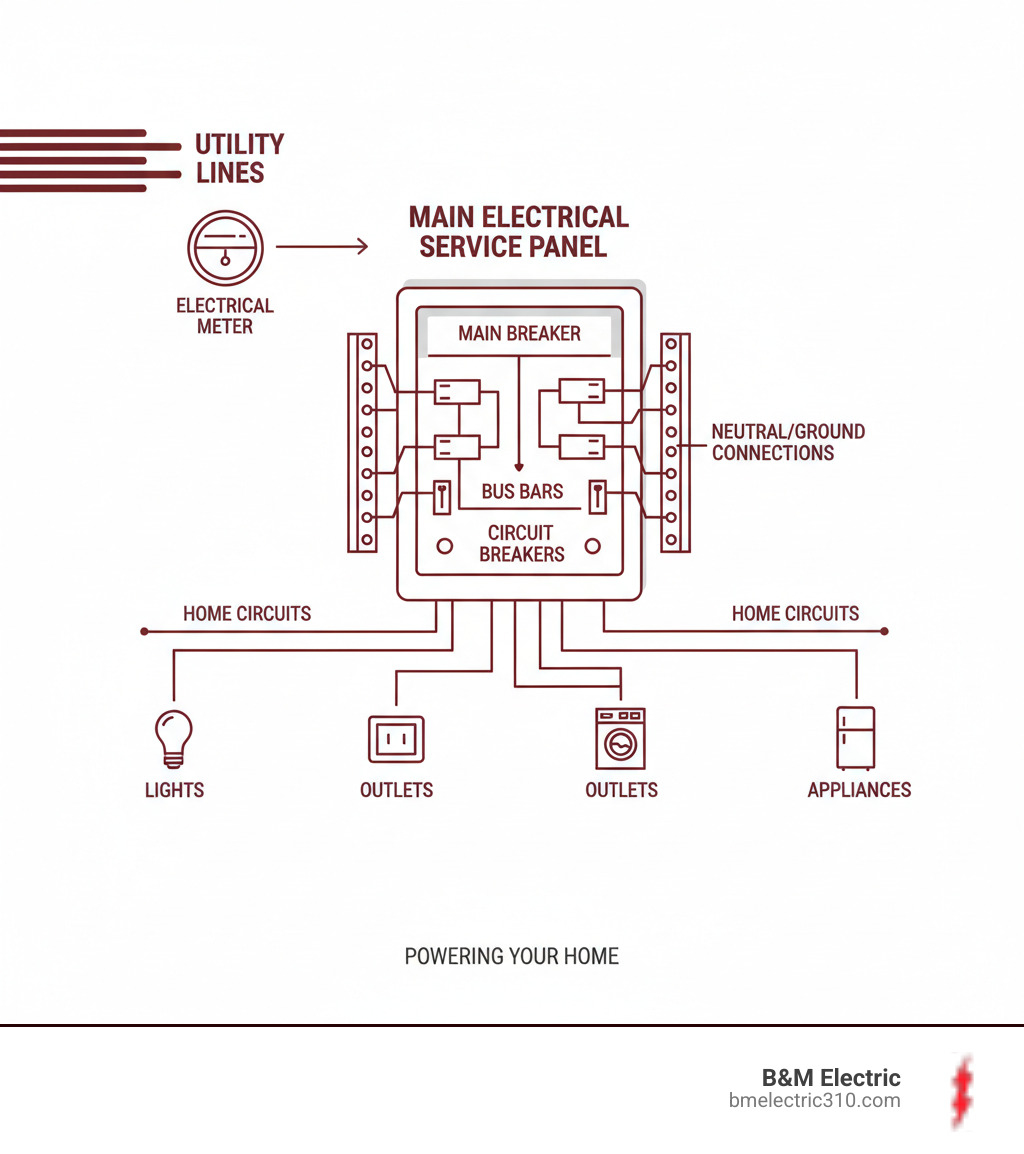
Your electrical panel, or breaker box, is the heart of your home’s electrical system. It receives power from the utility and distributes it to circuits for your lights, outlets, and appliances.
The main components include:
- Main breaker – Controls all power entering your home
- Circuit breakers – Protect individual circuits from overloads
- Bus bars – Distribute electricity to the breakers
- Neutral and ground bars – Provide safe return paths for electrical current
It acts as an electrical traffic controller. When a circuit overloads, the breaker “trips” to prevent dangerous conditions like electrical fires. An outdated or undersized panel struggles with modern electrical demands.
Older homes often have 60- to 100-amp panels, insufficient for today’s appliances, EV chargers, and smart technology. Most modern homes require at least 200-amp service for safe and efficient operation.
Is It Time for an Upgrade? 7 Key Warning Signs
Your electrical panel provides clear warning signs when it’s time for an upgrade. While panels last 25-40 years, performance issues can arise sooner. Your system will show warning signs before a critical failure.
Here are the telltale signs that your home might be ready for an electrical service panel replacement.
Frequent breaker trips are a clear signal. Breakers trip to prevent overloads, but if this happens regularly, your panel is likely undersized or failing.
When your lights flicker or dim as you use large appliances, it indicates your circuits are overloaded or the panel can’t provide consistent power.
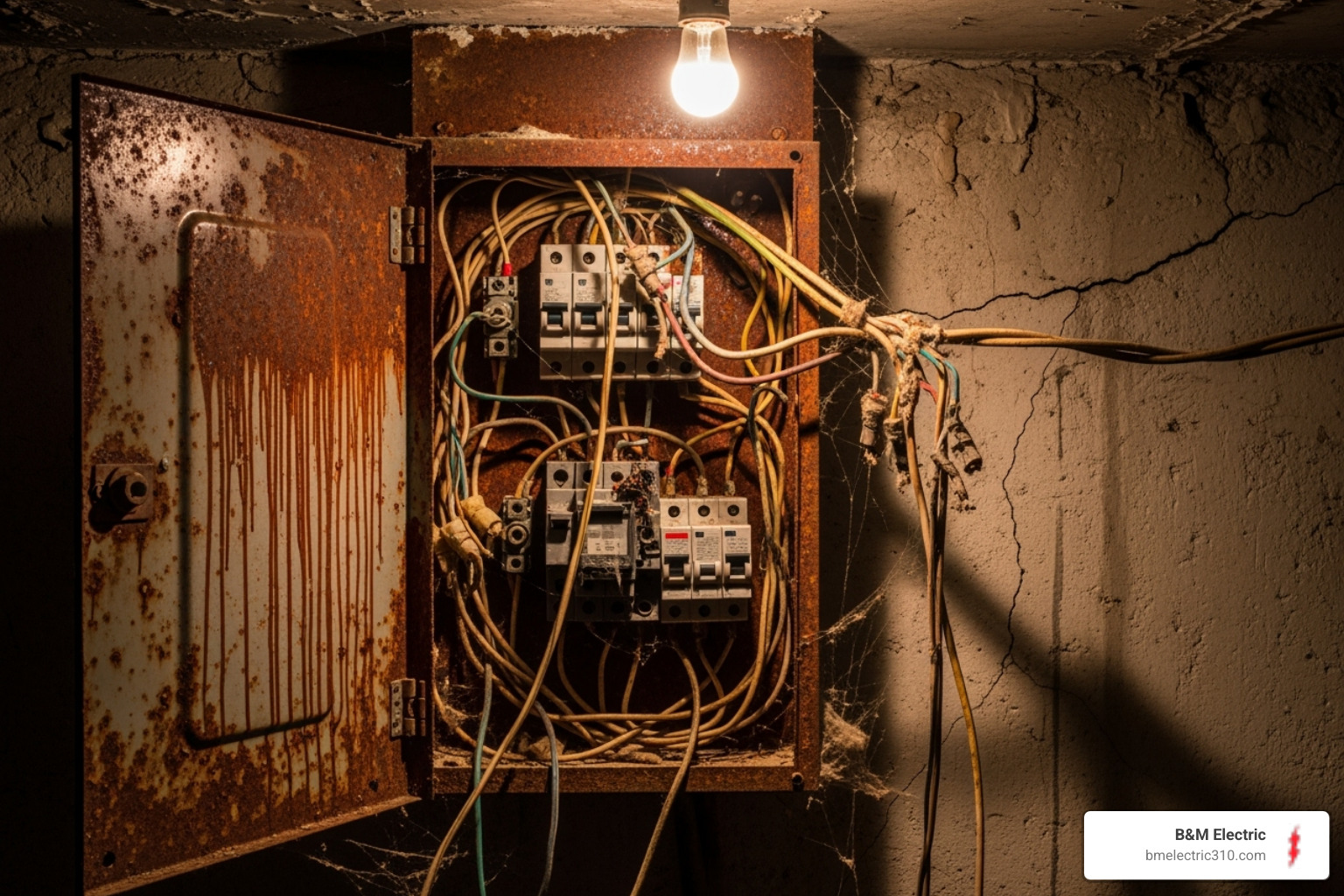
Burning smells or strange noises from your panel are serious. A burning odor suggests overheating wires, while buzzing or crackling points to loose connections. These are fire hazards that require immediate professional attention.
If the panel feels warm or hot, it indicates overheating components or an overloaded system, creating a serious fire risk.
Visible rust, water stains, or white chalky corrosion indicate moisture damage. Since water and electricity are a dangerous combination, this damage necessitates a replacement.
If your panel is over 25 years old, it likely wasn’t designed for modern electrical loads and may lack the capacity for today’s technology.
Are you living in a world of power strips and extension cords? Needing multiple power strips indicates your system lacks capacity, which can lead to dangerous circuit overloads.
If any of these situations sound familiar, it’s worth having your panel inspected. For more detailed information, check out our guide on Signs you need an Electrical Panel Upgrade. You can also visit the Consumer Product Safety Commission website to check for any safety recalls on electrical panels.
Outdated and Unsafe Panels
Homes from the 1950s-60s often have 60-amp fuse boxes that are inadequate for modern electrical demands. Some older circuit breaker panels also have design flaws that prevent them from tripping correctly, creating a significant fire risk. If your home has one of these problematic panels, electrical service panel replacement isn’t just an upgrade—it’s a safety necessity.
We see these Outdated Electrical Panels regularly in older South Bay homes. Many of the Electrical Repair Issues in Older Homes we encounter trace back to panels that have outlived their usefulness.
Planning for the Future
Your electrical system must support your future plans. Home renovations like a new kitchen, major appliances like central AC or a hot tub, an EV charger, and even the cumulative load of smart home technology can easily overwhelm an older electrical system.
Planning ahead with Electrical Panels and Home Renovations: Assessing your needs ensures your electrical system can handle whatever the future brings. It’s much easier to upgrade your panel before you need it than to find it’s inadequate when your new appliances arrive.
Understanding Panel Types and Sizing for Your Home
For an electrical service panel replacement, understanding amperage is key. Amperage measures the amount of electrical current your system can handle.
100-amp panels, once standard, are often insufficient for modern homes, though they may work for smaller houses with minimal electrical needs.
200-amp panels are now the standard for most homes, especially those over 2,000 sq. ft. or with high-demand appliances like central AC, electric ranges, or EV chargers. They provide ample capacity for modern living.
400-amp panels are for large homes with very high electrical demands, such as workshops, multiple EVs, or extensive smart systems.
Choosing the right size requires assessing your home’s square footage, appliances, and future plans. A professional calculates your needs to ensure the total load remains under 80% of the panel’s capacity for safety.
Here’s how older fuse boxes stack up against modern circuit breaker panels:
| Feature | Fuse Box (Older) | Circuit Breaker Panel (Modern) |
|---|---|---|
| Safety | Higher fire risk due to improper fuse replacement | Improved safety with automatic tripping, less fire risk |
| Capacity | Limited, often 60-100 amps, inadequate for modern use | Higher capacity, typically 100-400 amps, supports modern needs |
| Convenience | Fuses blow and must be replaced manually | Breakers trip and can be reset with a flip of a switch |
| Protection | Basic overload protection | Advanced protection (AFCI, GFCI) available |
From Fuse Boxes to Circuit Breakers
Fuses contain a wire that melts to stop overcurrents, requiring replacement. This led to dangerous practices, like using oversized fuses, creating fire hazards.
Circuit breakers are a major safety improvement. They automatically switch off during a fault and can be easily reset. Modern breakers also support sophisticated Arc Fault Circuit Interrupters (AFCIs) and Ground Fault Circuit Interrupters (GFCIs) that protect against electrical problems fuses could never detect. This makes Resolving Overloaded Electrical Panels much safer.
Main Panels vs. Sub-Panels
Your main panel is your home’s electrical hub, but sometimes specific areas need a sub-panel.
Sub-panels draw power from the main panel to serve a particular area, like a garage or workshop with heavy-duty tools. This adds convenience and dedicated circuits where needed. They are also ideal for home additions or detached structures, avoiding long, individual circuit runs.
Sub-panels offer a flexible way to expand capacity and can sometimes be an alternative to a full electrical service panel replacement. For comprehensive Electrical Services and expert assessment of your specific needs, we’re here to help you find the right solution.
The Professional Electrical Service Panel Replacement Process
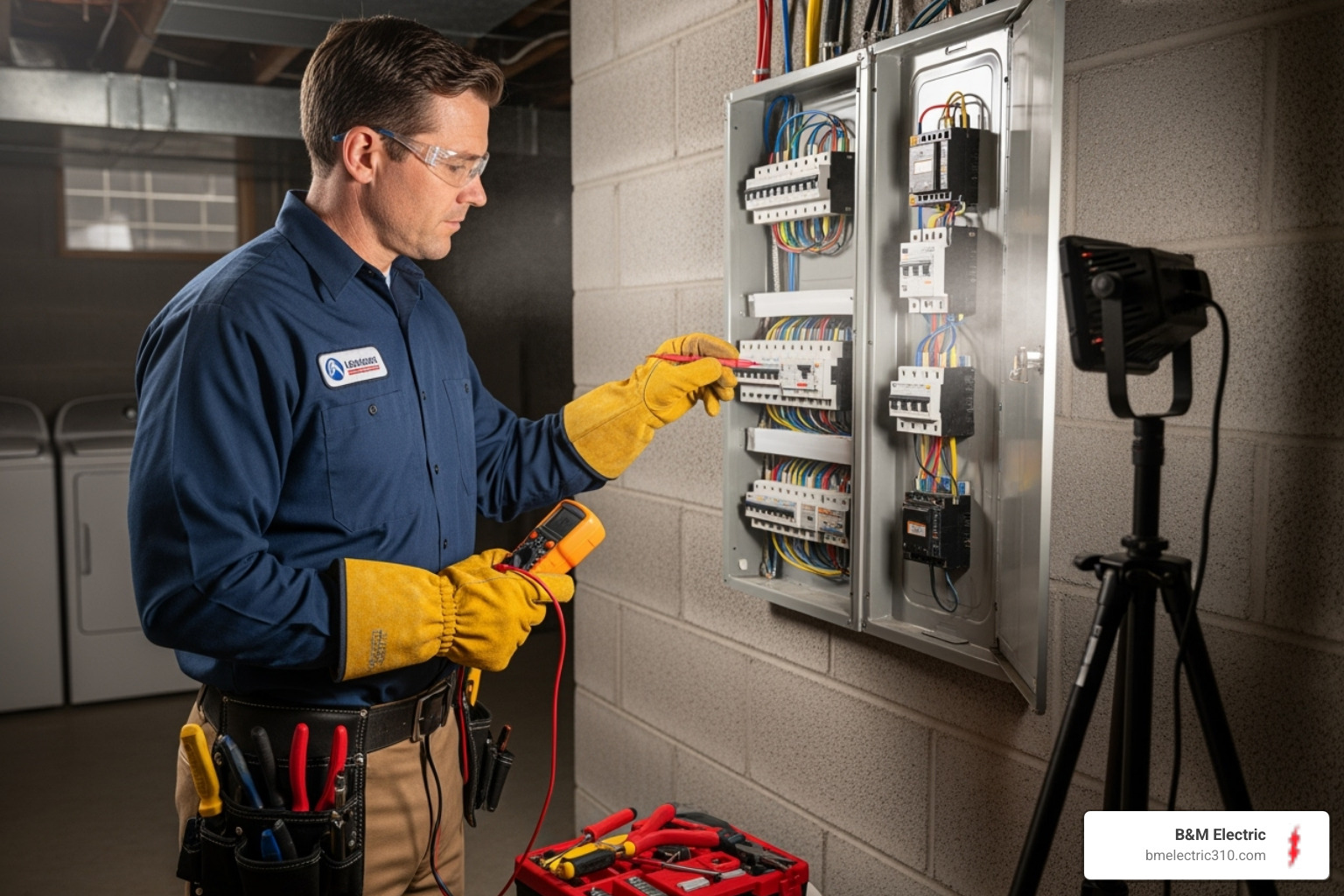
Electrical service panel replacement is a complex and dangerous job that demands the expertise of a licensed professional. The stakes are simply too high to leave to chance.
Why You Must Hire a Professional for Electrical Service Panel Replacement
Panel replacement is not a DIY project due to severe safety risks. DIY work involves lethal voltages that can cause electrocution, severe burns, or a house fire from a single mistake.
High voltage risks are extreme, as the main service wires remain live even when the main breaker is off. Only the utility company can safely disconnect them.
Code compliance is another critical factor. Professionals ensure the installation complies with the National Electrical Code (NEC) and local regulations, which is essential for safety and avoiding legal or insurance problems.
Permits and inspections are mandatory safety measures. A professional electrician manages this entire process to ensure your system is approved and safe.
Your homeowner’s insurance likely won’t cover damages from unpermitted DIY electrical work. For comprehensive guidance on staying safe, check out our Electrical Safety Tips and Electrical Repairs for a Safe Home.
What to Expect During Your Electrical Service Panel Replacement
Our replacement process prioritizes safety and quality with minimal disruption. Here’s what to expect:
The initial assessment is where we assess your current system and discuss future plans (like an EV charger or remodel) to correctly size your new panel.
Preparing the work area involves protecting your home and property, ensuring a safe work area, and explaining the process to you.
Power shutdown is a critical safety step. We coordinate with the utility to shut off power to your home, typically for 4-8 hours. We provide advance notice so you can plan for the outage.
Old panel removal is done after we carefully document existing wiring. We then safely disconnect and remove the old panel.
New panel installation involves securely mounting the new panel, ensuring it meets all safety codes for clearance and accessibility.
Circuit connection and labeling requires carefully reconnecting each circuit to the correct breaker. We finish by clearly labeling every circuit for your convenience.
Final inspection and testing is done on every circuit to ensure flawless operation. After our checks, we coordinate power restoration and the final municipal inspection.
We maintain clear communication throughout the process. Most standard replacements are completed in a single day, though more complex installations may require additional time.
Open uping the Benefits of a Modern Electrical Panel
An electrical service panel replacement is a key investment in your home’s safety, efficiency, and value, preparing it for modern demands.

Improved Safety and Peace of Mind
The primary benefit of a panel upgrade is improved safety and peace of mind. A modern, properly sized panel significantly reduces fire risk by eliminating the system stress caused by overloading older panels.
Modern panels also support AFCI/GFCI protection. Arc Fault Circuit Interrupters (AFCIs) prevent fires from electrical arcs, and Ground Fault Circuit Interrupters (GFCIs) prevent shocks, offering life-saving features unavailable in older panels.
System reliability improves dramatically, with fewer tripped breakers and consistent, clean power for your electronics. For additional safety insights specific to our area, check out our guide on Electrical Safety in Hermosa Beach: Tips.
Increased Capacity for Modern Living
Today’s homes require more power than ever for new appliances, smart devices, and work-from-home setups.
Powering new appliances becomes effortless. An upgraded panel provides the capacity for items like induction cooktops or heat pump water heaters, which often require dedicated circuits.
Supporting smart home devices is also crucial. A robust panel ensures reliable power for the cumulative load of smart thermostats, security cameras, and other connected devices. Learn more about how modern electrical systems work together in our post about the Connection of Smart Meters & Electrical Panels.
Future-proofing your home is a smart benefit. Upgrading provides the capacity needed for an EV charger, solar panels, or a home office, making future additions much simpler. This forward-thinking approach is central to effective Electrical Panel Upgrades.
Potential Incentives and Increased Home Value
A panel replacement can also offer financial benefits. An efficient electrical system allows appliances to run on steady power, improving their performance and lifespan.
Local incentives may be available for energy-efficient electrical upgrades. Check resources like Energy Star’s website for programs in your area.
Appeal to future buyers is significant. A modern panel is a strong selling point, signaling a well-maintained home that is ready for modern electrical loads and increasing its value.
Frequently Asked Questions about Electrical Panel Upgrades
Here are answers to common questions about electrical service panel replacement.
How long does an electrical panel typically last?
Most electrical panels have a lifespan of 25 to 40 years. However, this can vary based on the original installation quality, environmental factors, and the electrical load it has managed.
Signs of wear are more important than age alone. A struggling 20-year-old panel showing warning signs is a higher priority for replacement than a well-maintained 35-year-old one that is performing well.
How long does the replacement process take?
A standard electrical service panel replacement typically takes 4 to 8 hours to complete safely. During this time, your power will be off as we remove the old panel and install, wire, and test the new one.
We recommend planning for the power outage by charging devices in advance. Complex jobs, such as relocating a panel or upgrading the service line, may take longer. We provide a clear timeline after our initial assessment.
Can I add more circuits to my existing panel if it’s full?
While it’s sometimes possible to add circuits to a full panel using tandem breakers, a full panel is often a sign that an upgrade is necessary. Tandem (or “piggyback”) breakers allow two circuits in one slot, but only if the panel is designed for them and has enough overall capacity. They do not increase the panel’s total amperage.
If your panel is full and you’re already experiencing issues like frequent tripping or dimming lights, adding more circuits won’t solve the underlying problem of insufficient capacity. A professional assessment of the panel’s load is crucial. Often, a full electrical service panel replacement is the safest and most effective long-term solution.
Conclusion: Powering Your Home Safely into the Future
Your home’s electrical panel is essential for modern life, but an outdated panel can become a safety hazard when it can no longer meet today’s electrical demands. An electrical service panel replacement addresses warning signs like frequent breaker trips and provides improved safety with AFCI/GFCI protection. It also delivers increased capacity and reliability for your appliances and smart technology.
An outdated panel is more than an inconvenience; it’s a risk. Upgrading to a modern system solves current issues and future-proofs your home for tomorrow’s electrical needs. A panel upgrade is a smart investment, whether you’re adding an EV charger, installing smart home devices, or simply prioritizing your family’s safety. It also increases your home’s appeal to future buyers.
For 50 years, B&M Electric has been the trusted choice for homeowners in Torrance and the South Bay for electrical service panel replacement and other electrical services. Our commitment to precision, care, and customer experience ensures your project is handled with the expertise your home deserves.
When you’re ready to power your home safely, from a complete electrical service panel replacement to an electrical installation for home remodels, we’re here to help. A safe, comfortable home starts with an electrical system you can trust.