Light Up Your Life: A Quick Guide to Replacing Any Light Fixture
By B&M Electric November 20, 2025
Wiring light fixtures: 3 Easy & Safe Steps
Why Proper Wiring Makes All the Difference
Wiring light fixtures is one of the most rewarding DIY home improvement projects you can tackle. It transforms any room instantly while being achievable for most homeowners with basic tools and safety knowledge.
Quick Answer for Wiring Light Fixtures:
- Turn off power at the circuit breaker and test with a voltage tester
- Remove old fixture by disconnecting wires and unscrewing mounting bracket
- Connect new fixture wires – black to black (hot), white to white (neutral), green/copper to ground
- Secure connections with wire nuts and electrical tape
- Mount fixture to ceiling bracket and restore power
The process might seem intimidating at first. As one DIY blogger noted, “Working with electricity is a little intimidating if you’re inexperienced, but if you follow my safety tips and have a second set of eyes on your work, it’s not something to be afraid of.”
Whether you’re replacing an outdated ceiling light, installing a stunning new chandelier, or adding pendant lights over your kitchen island, the basic wiring principles remain the same. Most installations can be completed in under two hours with proper preparation.
The key is understanding your home’s electrical system, following safety protocols, and knowing when to call a professional. According to the National Fire Protection Association, electrical equipment causes an average of 26,100 home fires annually – making proper installation techniques essential for your family’s safety.

Wiring light fixtures word list:
Before You Begin: Safety First and Essential Prep
Before you get excited about changing your space with that beautiful new fixture, let’s talk about the foundation of any successful electrical project: safety and preparation. I know it’s tempting to dive right in, but taking these steps seriously will keep you safe and ensure your wiring light fixtures project goes smoothly from start to finish.
Essential Safety Precautions
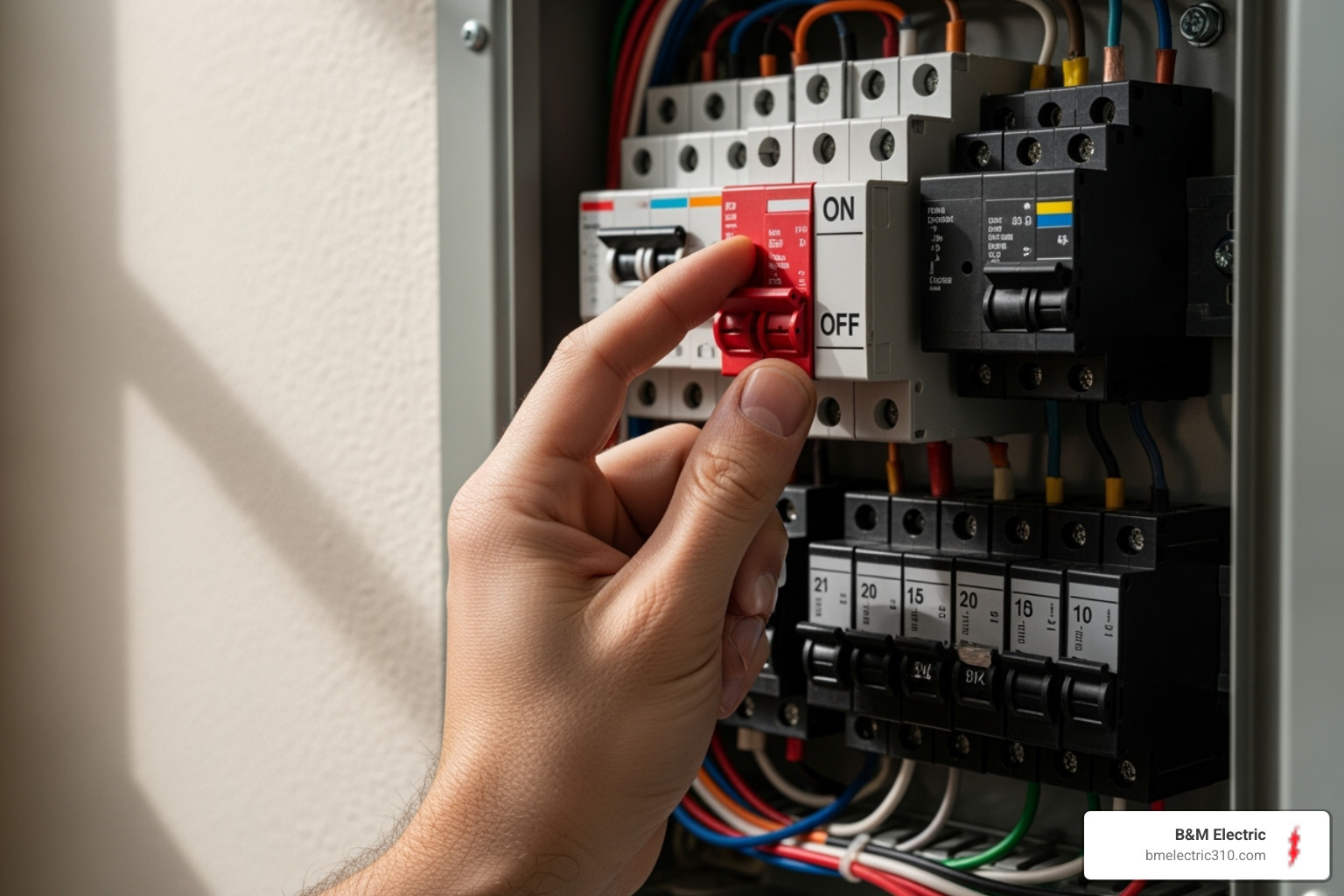
Here’s the golden rule that should be permanently etched in your mind: always turn off the power first. No exceptions, no shortcuts, no “I’ll just be quick about it.” Head straight to your electrical panel (also called the breaker box) and flip the circuit breaker that controls your work area to the “OFF” position.
Not sure which breaker controls that room? Don’t guess! Turn on the light you’re planning to replace, then flip breakers one by one until the light goes out. Mark that breaker with a piece of tape so you’ll remember for next time.
But wait – you’re not done yet! Even after flipping the breaker, you need to double-check that the power is actually off. Grab your Voltage Tester and test each wire you’ll be working with. This little device is your best friend and could literally save your life. If it lights up or beeps when touching a wire, the power is still flowing, and you need to find the correct breaker.
When working on ceiling fixtures, always use a fiberglass ladder instead of a metal one. Metal conducts electricity, and in the unlikely event something goes wrong, you don’t want to become part of the electrical circuit. Trust me on this one – it’s worth the extra investment in your safety.
Here’s a sobering fact: according to the National Fire Protection Association, electrical equipment causes about 26,100 home fires annually. That’s why we take these precautions so seriously. For more ways to keep your home electrically safe, check out our comprehensive guide on Electrical Safety Tips for Outdoor Living Enjoying.
Tools and Materials You’ll Need
Nothing’s more frustrating than getting halfway through a project and realizing you’re missing a crucial tool. Let’s make sure you have everything ready before you start climbing that ladder.
Your essential toolkit should include both Phillips-head and flat-head screwdrivers for various mounting screws. You’ll also need Wire Cutters to trim wires to the right length and strip away insulation. Don’t forget Wire Nuts – these small, cone-shaped connectors join your wires securely together. Your new fixture might include some, but it’s smart to have extras on hand.
Electrical Tape adds an extra layer of protection around your wire connections, while a sturdy ladder (preferably fiberglass, remember?) gets you safely to ceiling height. A Voltage Tester is absolutely non-negotiable for confirming the power is off.
Here’s a pro tip: grab a Head Lamp before you start. Working with both hands free while having perfect lighting on your work area is a game-changer, especially in dimly lit rooms or tight spaces.
Of course, you’ll need your new light fixture with all its mounting hardware and instructions. If your home has non-standard wiring colors, a multimeter can help identify which wire is which. An S-hook can be a lifesaver for temporarily supporting heavy fixtures while you make connections – your arms will thank you!
Understanding Your Home’s Wiring
Before you start connecting wires, let’s decode what you’re looking at inside that electrical box. Most modern homes follow a standard color system that makes wiring light fixtures much more straightforward.
The black wire is your hot wire – it carries electrical current to the fixture and is the one that will give you a shock if the power isn’t off. The white wire is the neutral wire, which completes the circuit by carrying current back to your electrical panel. Finally, the green wire or bare copper wire is your ground wire, providing a safety path for electricity in case something goes wrong.
But here’s where things can get tricky: older homes don’t always follow these rules. You might find wires that are all the same color, unusual color combinations, or even brittle, outdated wiring that needs professional attention. If you encounter aluminum wiring (common in homes built between 1965-1973), stop right there and call a professional – this type of wiring requires special handling and connectors.
When you’re unsure about wire identification, your voltage tester or multimeter becomes invaluable. Take the time to properly identify each wire before making any connections. If you find damaged wiring, non-standard colors, or anything that makes you uncomfortable, there’s no shame in calling for backup.
For homeowners dealing with older electrical systems, our article on Electrical Repair Issues in Older Homes provides valuable insights into common challenges and when professional help is your best bet.
Understanding your wiring isn’t just about completing the project – it’s about doing it safely and correctly so you can enjoy your beautiful new lighting for years to come.
The Step-by-Step Guide to Wiring Light Fixtures
Now comes the exciting part – changing your space with that beautiful new fixture! Wiring light fixtures might seem daunting at first, but with our clear steps, you’ll feel confident tackling this rewarding project. As one experienced DIYer put it, this process might feel like an “arm workout” if you’re flying solo, but the results are absolutely worth it.
Step 1: Safely Removing the Old Fixture
Before touching anything, confirm the power is completely off. We know we’ve mentioned this multiple times, but it’s that important! Test with your voltage tester one more time – better safe than sorry.
If you’re dealing with a heavy or awkward fixture, grab a helper or use an S-hook to support the weight while you work. This simple trick prevents strain on both the wires and your back. Trust us, your arms will thank you later!
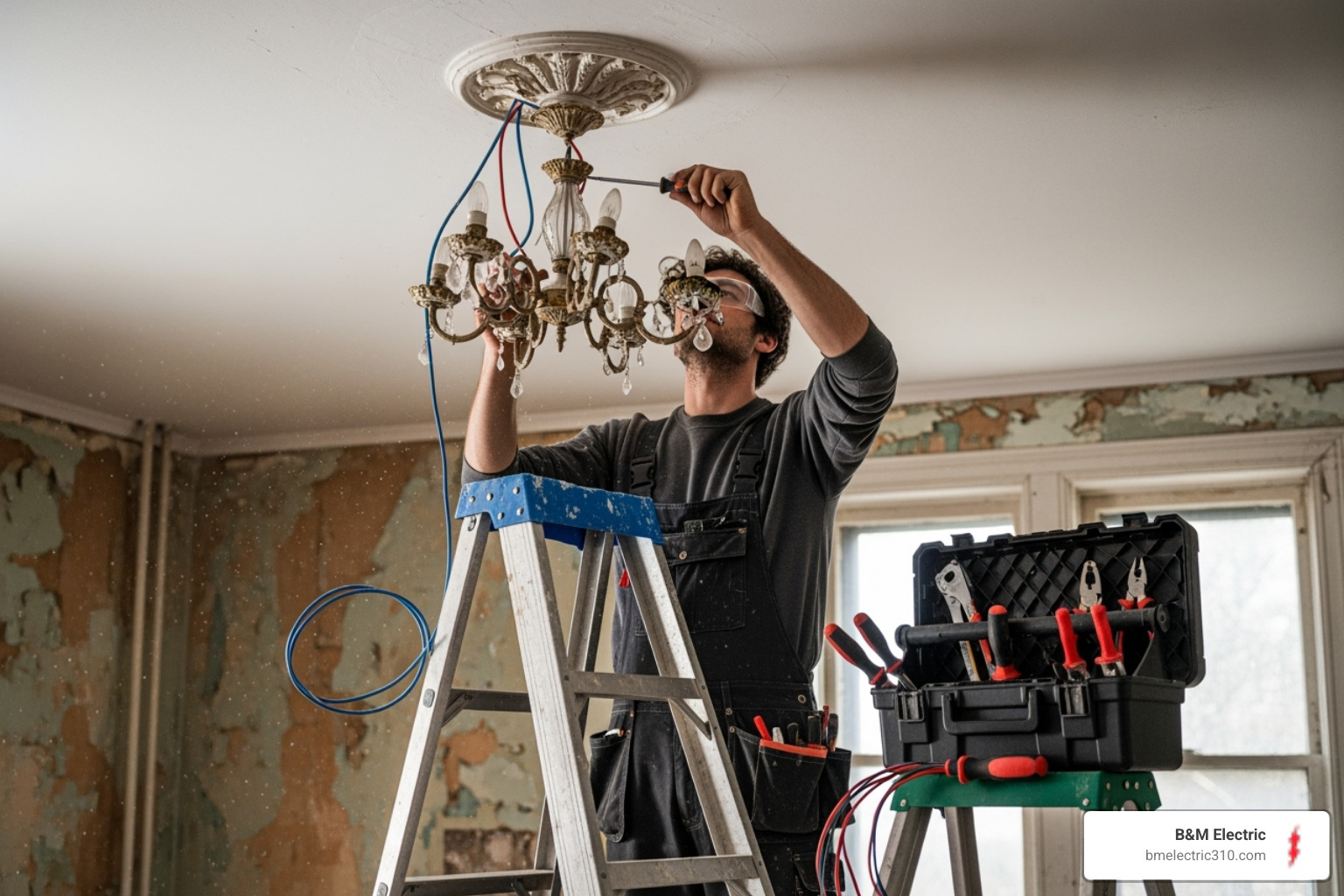
Start by unscrewing the canopy – that’s the decorative cover hiding all the electrical connections. Work slowly and carefully to expose the wires and mounting bracket underneath.
Here’s a pro tip that can save you hours of frustration: take a clear photo of the existing wiring before disconnecting anything. Even experienced electricians do this! If something goes wrong or you get confused later, this picture becomes your roadmap back to a working light.
Now you can disconnect the wires by gently twisting off the wire nuts counter-clockwise. Keep those wire nuts – you might be able to reuse them with your new fixture. Separate the wires carefully, and then remove the old mounting bracket by unscrewing it from the electrical junction box. Your old fixture is now history!
Step 2: Mounting and Wiring Your New Light Fixture
This is where the magic happens! Wiring light fixtures correctly ensures both beautiful lighting and complete safety for your family.
Start by installing your new mounting bracket according to the manufacturer’s instructions. Every fixture is a bit different, so don’t skip reading those directions. Make sure the bracket sits flush and secure against the electrical junction box.
Take a moment to check your junction box support. Most standard boxes handle up to 50 pounds just fine, but if you’re installing a substantial chandelier or heavy pendant light, you might need a fan-rated brace or heavy-duty box. Installing a fixture that’s too heavy for your box isn’t just a mistake – it’s a serious safety hazard that could result in your beautiful new light crashing down.
Time to prepare those wire ends. If they aren’t already stripped, use your wire strippers to expose about 3/4 to 1 inch of clean copper wire. Make sure the ends look neat and aren’t frayed or damaged.
Always connect the ground wires first – safety comes before everything else. Take the bare copper or green wire from your fixture and twist it clockwise with the ground wire from your electrical box. Secure this connection with a wire nut. If you have a metal electrical box, you’ll also connect the ground wire to the green grounding screw on your mounting bracket.
Next, connect the neutral wires by joining the white wire from your fixture to the white wire from your home’s electrical system. Twist them together clockwise and cap with a wire nut.
Finally, connect the hot wires – the black wire from your fixture goes to the black (sometimes red) wire from your electrical box. Same process: twist clockwise and secure with a wire nut.
For extra peace of mind, wrap each wire nut connection with electrical tape. This prevents accidental loosening and adds another layer of insulation. It’s a small step that makes a big difference in safety.
If you’re installing a pendant light or chandelier, now’s the time to adjust the hanging length. Most fixtures allow you to modify the cord or chain length within the canopy. For dining tables, aim for 30-34 inches above the surface for the perfect balance of light and headroom.
Your new fixture is ready to Illuminate Your Living Spaces and completely transform the feel of your room!
Step 3: Securing and Finishing the Installation
You’re in the home stretch now! Carefully tuck all the connected wires back into the electrical junction box. This step requires patience – don’t force anything or allow wires to get pinched. Everything should fit snugly but not be crammed in.
Attach your new fixture to the mounting bracket following the specific instructions that came with your light. This usually involves screws or a decorative nut that threads onto a mounting rod. Make sure everything feels solid and secure.
Install the canopy by sliding it up against the ceiling to cover all the wiring and hardware. This gives your installation that clean, professional look while keeping all the electrical connections safely hidden.
Time for the moment of truth – install your light bulbs! We highly recommend choosing energy-efficient LED bulbs. They last significantly longer than traditional bulbs and will save you money on electricity bills month after month. You can Find LED Lighting Solutions that perfectly match your style and needs.

Final Checks, Troubleshooting, and Knowing Your Limits
You’ve done the hard work of wiring light fixtures, and now comes the exciting moment we’ve all been waiting for – seeing your beautiful new fixture light up your space!
Testing Your New Light Fixture
Head back to your breaker box and restore power by flipping that circuit breaker back to the “ON” position. Take a deep breath – you’ve earned this moment! Now return to your room and flip the light switch. If everything was connected correctly, your new light fixture should brilliantly illuminate the room, changing the entire space.
But what if nothing happens? Don’t panic! This is actually more common than you’d think, and it’s usually a simple fix.
First things first: turn the power back off at the breaker. Safety always comes first, even during troubleshooting steps. Carefully remove the fixture canopy again (you’ll be so glad you took that photo of the original wiring setup!).
The most common culprit is a loose connection or a mix-up between wires. Check connections by examining each wire nut – they should be twisted on tightly with no loose copper showing. Make sure the black (hot) wires are connected together, the white (neutral) wires are paired up, and the ground wires are properly secured.
Sometimes a faulty connection happens when bare wires touch each other or the metal electrical box, which can cause a short circuit. Ensure all connections are clean and separated from one another. Re-secure everything, tuck the wires back into the junction box, and test again.
Common Mistakes to Avoid When Wiring Light Fixtures
We’ve seen our share of electrical mishaps over the years (and learned from a few of our own early mistakes, we’ll admit!). Here are the most common pitfalls that can turn your lighting project into a headache.
Forgetting to turn off power is hands-down the most dangerous mistake. It bears repeating: always confirm the electricity is off with a voltage tester before touching any wires. This isn’t just a suggestion – it’s a life-saving habit.
Loose connections cause more problems than you might imagine. Wires must be twisted together firmly and secured with wire nuts that won’t budge when you gently tug on them. Loose connections create flickering lights, intermittent power, and dangerous overheating that can start fires.
Here’s something that surprises many DIYers: over-tightening screws can be just as problematic as loose ones. While connections need to be secure, cranking down too hard on wire terminals can damage the wire insulation or crack the fixture itself.
Ignoring the ground wire is a safety shortcut you should never take. That bare copper or green wire isn’t optional – it’s your protection against electrical shock. If your fixture has a ground wire, it absolutely must be connected to your home’s grounding system.
Overcrowded junction boxes create a host of problems. Stuffing too many wires into a small space generates heat, pinches connections, and makes future maintenance nearly impossible. If you’re struggling to fit everything, you might need a larger box.
Don’t forget to verify your fixture’s weight against your junction box’s capacity. Standard boxes support up to 50 pounds, but that gorgeous new chandelier might need special reinforcement. Installing an overly heavy fixture on a standard box is asking for trouble.
For additional guidance and detailed visual instructions, this comprehensive How to Install a Light Fixture: A DIY Guide offers excellent supplementary information.
When to Call a Professional Electrician
While wiring light fixtures can be incredibly rewarding, knowing when to step back and call in the experts is just as important as knowing how to do the work yourself.
Complex wiring situations like three-way switches (controlled from two different locations) or four-way switches can quickly become confusing puzzles. These setups involve additional traveler wires and specific connection patterns that aren’t always intuitive, even for experienced DIYers.
If you find damaged or old wiring with cracked, brittle, or frayed insulation, stop immediately. Aluminum wiring, which was used in some homes built between 1965 and 1973, requires special connectors and techniques that most homeowners aren’t equipped to handle safely.
Installing a fixture where no existing fixture was before is a completely different project. This involves running new electrical cable, potentially cutting into walls or ceilings, installing new junction boxes, and often requires permits and inspections to meet local building codes.
Feeling unsafe or uncertain at any point during your project is perhaps the most important reason to call a professional. There’s absolutely no shame in recognizing when a job exceeds your comfort level or skill set. Your safety and your family’s wellbeing are worth far more than the satisfaction of completing a DIY project.
Non-standard wiring colors or situations where your voltage tester gives confusing readings are clear signals to bring in someone with the training and tools to properly diagnose your electrical system.
At B&M Electric, we’ve been helping Torrance and South Bay homeowners with their electrical needs for 50 years. Our experienced Residential Electrician team understands that some projects are perfect for DIY enthusiasts, while others require professional expertise. We’re always here when you need that extra peace of mind or specialized knowledge to get the job done safely and correctly.
Frequently Asked Questions about Wiring Light Fixtures
You’ve got questions, and we’ve got answers! These are the most common concerns homeowners have when wiring light fixtures. Don’t worry – we’ve all been there, staring at a tangle of wires and wondering what goes where.
What is the role of a grounding wire, and how should it be connected?
Think of the ground wire as your electrical safety net. This crucial wire protects you and your family from electric shock by providing a safe pathway for electrical current to travel to the earth if something goes wrong with your fixture.
You’ll typically spot the ground wire as either a bare copper wire or one covered in green insulation. When wiring light fixtures, always connect this wire to the green grounding screw on your fixture’s mounting bracket and to the ground wire from your electrical box.
Here’s where it gets a bit more detailed: if you have a metal electrical box, the ground wire first wraps around a ground screw in the back of the box to bond the box itself, then continues to your fixture’s ground screw. This ensures the entire metal box is grounded for safety.
In your home’s main breaker panel, the ground wire bonds with the neutral at the neutral bar. However, in subpanels, the ground and neutral must stay separate, each with their own bar. Proper grounding is absolutely paramount for safety – incorrect grounding can be extremely dangerous and potentially deadly.
What if my house wiring colors don’t match the new fixture?
Ah, the joys of older homes! While we’d love for every house to follow the standard black (hot), white (neutral), and copper/green (ground) color scheme, life isn’t always that simple. Some older homes might surprise you with red wires as hot wires instead of black, or other creative color combinations that made sense decades ago.
When you encounter non-standard colors, never guess. It’s absolutely critical to use a voltage tester or multimeter to identify which wire is hot before proceeding. Here’s the safe approach: turn the power on briefly, use your voltage detector to find the live wire (it will light up or beep when it detects electricity), then turn the power off again before making any connections.
If you’re feeling uncertain about wire identification, or if your voltage tester isn’t giving you clear answers, it’s always safest to consult a professional. Trust us – avoiding dangerous misconnections is worth the peace of mind.
Can I install a heavier chandelier where a light fixture was?
This is such a great question, and the answer isn’t always straightforward. Just because there’s already a light fixture doesn’t mean your ceiling can handle that gorgeous, hefty chandelier you’ve been eyeing.
Standard electrical boxes are typically rated for up to 50 pounds, but that beautiful chandelier might weigh considerably more. Installing a fixture that exceeds your box’s weight capacity is a serious safety hazard – imagine it pulling away from the ceiling, potentially damaging your fixture, your ceiling, and worst of all, possibly injuring someone below.
Before hanging anything heavy, you’ll need to check your existing box’s weight rating. If your new chandelier exceeds this limit, you’ll need to install a special fan-rated brace or heavy-duty box designed for greater weight support. This upgrade typically requires opening up the ceiling area around the box, which might be beyond the scope of a simple DIY project.
When in doubt, always verify the weight capacity of your existing box or have a professional upgrade it if necessary. Your safety – and your beautiful new chandelier – will thank you for taking this extra step.
Let a Professional Handle the Wires
There’s something incredibly satisfying about stepping back and admiring a beautiful new light fixture that you installed yourself. Wiring light fixtures can absolutely be a rewarding DIY project that transforms your space and gives you that wonderful sense of accomplishment.
But here’s the thing – and we can’t stress this enough – safety must always come first. Throughout this guide, we’ve walked you through the steps, safety precautions, and common pitfalls. Yet even with all this knowledge, there are times when the smartest move is to set down your wire strippers and pick up the phone instead.
Complex installations can quickly become overwhelming. Maybe you’ve finded your home has three-way switches controlling the fixture, or you’ve uncovered some damaged or old wiring that wasn’t visible before. Perhaps you’re dealing with aluminum wiring that requires special handling, or you realize there’s no existing fixture where you want to install your new light.
Older homes especially can throw curveballs that even experienced DIYers find challenging. Non-standard wire colors, outdated electrical boxes, or wiring that doesn’t meet current codes can turn a simple fixture swap into a complex electrical project.
Most importantly, if you ever feel uncertain or unsafe during any part of the process, that’s your cue to stop. There’s absolutely no shame in calling for professional help – in fact, it’s the smart thing to do.
This is where the expert electricians at B&M Electric come in. With 50 years of experience serving Torrance and the South Bay, we’ve seen every type of electrical challenge imaginable. We understand the unique quirks of homes in our area, from vintage beach cottages to modern developments.
Our team ensures your lighting solutions are installed safely and correctly. We bring the precision and expertise that comes from decades of experience, plus that personal touch that makes working with us an actually enjoyable experience.
Whether you need help finishing a project you started, want professional installation from the beginning, or simply want peace of mind knowing everything is done to code, we’re here for you. Because at the end of the day, the most beautiful light fixture isn’t worth compromising your family’s safety.