Everything You Need to Know About Remodel Permits and Codes
By B&M Electric June 5, 2026
Everything You Need to Know About Remodel Permits and Codes
Why a Home Remodel Electrical Planning Guide for Homeowners Matters Before You Touch a Single Wall
A solid home remodel electrical planning guide for homeowners is the difference between a renovation that goes smoothly and one that stalls at inspection — or worse, creates a safety hazard down the road. Whether you’re updating a kitchen in Torrance, finishing a basement in Redondo Beach, or adding square footage anywhere in the South Bay, your electrical system needs to be part of the conversation from day one.
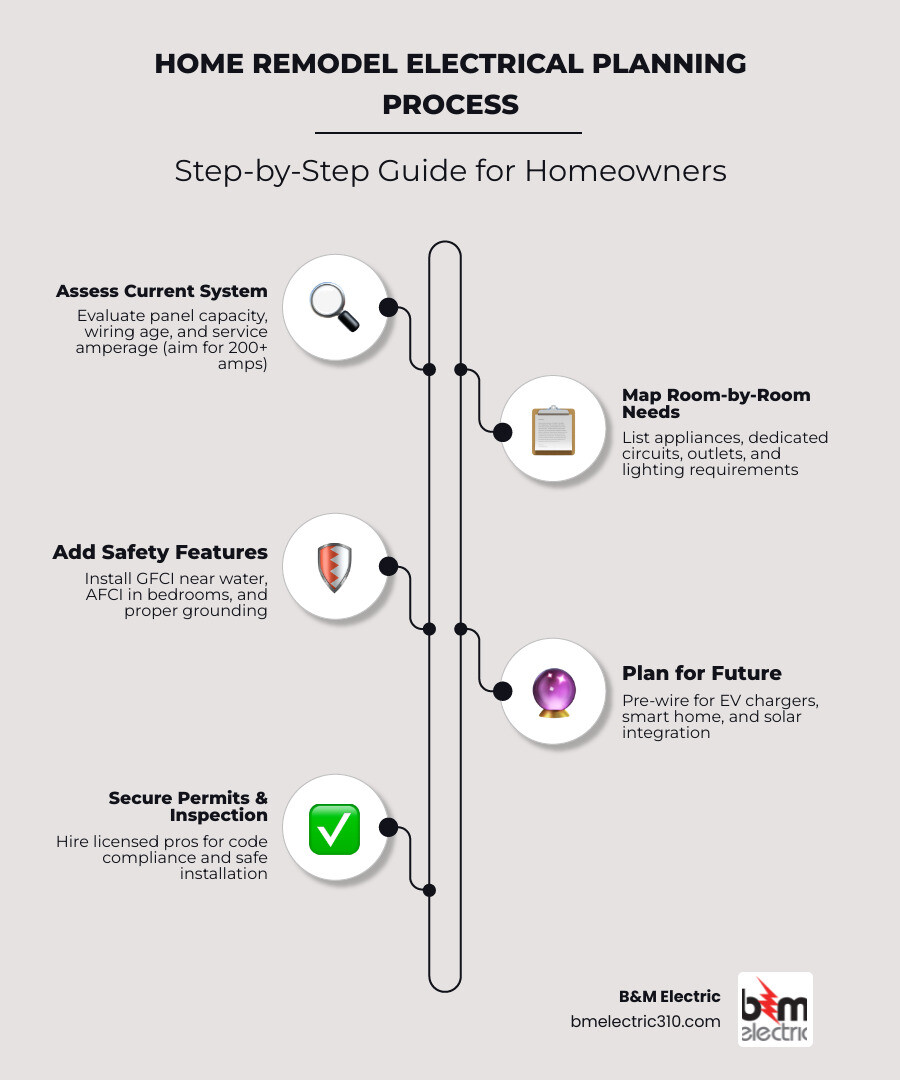
Here’s a quick overview of what good electrical planning covers:
- Assess your current system — Check panel capacity, wiring condition, and service amperage (most modern homes need at least 200 amps)
- Map your power needs room by room — Identify dedicated circuits for appliances, outlets, lighting, and safety devices
- Include required safety features — GFCI protection near water, AFCI breakers in sleeping areas, proper grounding throughout
- Plan for the future — Pre-wire for EV chargers, smart home controls, and solar-electrical integration while walls are open
- Handle permits and inspections — All significant electrical work requires permits and must pass inspection under the National Electrical Code (NEC)
- Work with a licensed electrician — Code compliance, load calculations, and safe installation are not DIY territory
Electrical failures cause an estimated 51,000 home fires every year in the United States. A remodel is your best opportunity to get things right — and skipping the electrical planning step is one of the most costly mistakes homeowners make. Homes built before the 1970s often run on just 60 to 100 amps of service, which simply can’t handle modern appliances, EV chargers, or smart home systems. And for older homes — anything built before 1990 — outdated wiring like aluminum or cloth-insulated wire can be a serious fire risk that’s invisible until something goes wrong.
The good news: when electrical upgrades happen during a remodel, the walls are already open. That makes it far less disruptive and far more affordable to do it right the first time.
Assessing Your Current Electrical Capacity and System Condition
Before you pick out that high-end induction range or plan your dream home theater, we need to look at the “brain” of your home: the electrical panel. In April 2026, the average household consumes significantly more power than it did even ten years ago. If your home still relies on the original electrical infrastructure, your remodel might be the catalyst for a much-needed system overhaul.

When we evaluate a home, we perform a detailed load calculation. This isn’t just a guess; it’s a mathematical assessment of every light, outlet, and appliance in your home. We look for signs of aging, such as corrosion, heat damage, or “double-tapped” breakers where two wires are shoved into one slot. Electrical Panels and Home Renovations Assessing is a critical first step because if the foundation of your power system is weak, the rest of your remodel is at risk.
Determining if You Need an Electrical Panel Upgrade
How do you know if your panel is up to the task? Frequent breaker tripping is the most obvious red flag. If you can’t run the microwave and the toaster at the same time without a trip to the garage, your system is crying for help. Flickering lights when the AC kicks on is another classic sign of insufficient capacity.
Many older homes in the South Bay were built with 60-amp or 100-amp service. By modern standards, these are considered “underpowered.” Today, a 200-amp service is the industry standard for a single-family home, especially if you plan on adding energy-heavy features like a hot tub or an EV charger. If your panel is more than 25 years old, it’s often safer and more cost-effective to opt for Electrical Panel Upgrades now rather than waiting for a failure.
Creating a Comprehensive Electrical Load List
We recommend every homeowner create a “load list” during the planning phase. Think of this as a manifest of every power-hungry item you plan to use.
- High-wattage appliances: Refrigerators, dishwashers, ovens, and dryers.
- Dedicated circuits: Modern codes require certain items (like your fridge or microwave) to have their own “lane” on the electrical highway so they don’t interfere with other devices.
- Future expansion: Are you planning to finish the attic in two years? Adding capacity now saves you from ripping open walls later.
Home Remodel Electrical Planning Guide for Homeowners
Planning is where we prevent “past-you” from making “future-you” very frustrated. A professional electrical plan looks like a blueprint, marking exactly where every wire, box, and switch will live. We follow the National Electrical Code (NEC) 2023 standards to ensure your home is not only functional but safe.
One of the most important aspects of this plan is the wiring material itself. We use high-quality copper wiring, which is the gold standard for conductivity and safety. We also ensure a robust grounding system is in place. Grounding provides a safe path for excess electricity to travel into the earth, protecting your electronics and your family from surges. Following these Shock Proof Your Renovation Expert Electrical Installation Tips ensures your home meets the highest safety benchmarks.
Essential Safety Features in Your Home Remodel Electrical Planning Guide for Homeowners
Safety isn’t just a suggestion; it’s the law. Your remodel must include:
- GFCI (Ground Fault Circuit Interrupter) Protection: These are mandatory in “wet” areas like kitchens, bathrooms, and garages. They shut off power in milliseconds if they detect a leak to ground, preventing electrocution.
- AFCI (Arc Fault Circuit Interrupter) Breakers: These protect against fires caused by “arcing”—when electricity jumps between damaged wires. These are now required in most living and sleeping areas.
- Tamper-Resistant Outlets: These have built-in shutters to prevent children from sticking objects into the slots.
Implementing these Redondo Beach Residential Remodel Expert Electrical Solutions is a non-negotiable part of a modern renovation.
Planning Outlet and Switch Placement for Modern Living
Have you ever lived in a house where the only outlet in the bedroom is behind the headboard? Or where the light switch for the hallway is at the other end of the hall? Proper placement is an art form.
- Kitchen Workflow: Outlets should be spaced along your countertops so you never have to stretch a cord over a hot stove.
- Bathroom Safety: Switches should be placed away from the shower, and outlets should be conveniently located for hair dryers and electric toothbrushes.
- Living Room Media: We often suggest “clock outlets” (recessed outlets) behind wall-mounted TVs to hide messy cords.
Choosing the right Electrical Fixtures for Remodeled Home involves thinking about how you actually move through your space.
Room-by-Room Power Needs and Dedicated Circuit Requirements
Every room in your house has a different “personality” when it comes to power. A kitchen is a high-demand powerhouse, while a bedroom is more about comfort and convenience.
In the kitchen, we plan for “Small Appliance Branch Circuits” (SABC). These are dedicated 20-amp circuits designed specifically for the high-draw devices you use on your counters, like blenders and coffee makers. If you’re switching from a gas range to an induction model, you’ll need a dedicated 240V circuit—something we frequently include in an Electrical Plan for Winter Remodels when homeowners are spending more time cooking indoors.
Kitchen and Bathroom Electrical Standards
Bathrooms require at least one dedicated 20-amp circuit for outlets. This ensures that a high-wattage hair dryer doesn’t blow a fuse while someone else is using a vacuum in the next room. We also see a rising demand for “luxury” electrical additions:
- Bidet Power: Many modern toilets require a nearby GFCI outlet.
- Heated Floors: These need their own dedicated circuit to maintain warmth efficiently.
- Exhaust Fans: These must be vented properly and wired to handle moisture.
If you are in the middle of a project and realize you missed these details, our Need It Now Same Day Electrical Installation for Your Redondo Beach Remodel service can help keep your project on track.
Living Areas and Bedroom Functionality
Modern living rooms are tech hubs. We recommend adding outlets with built-in USB and USB-C ports near sofas and nightstands. Smart dimmers allow you to set the mood for movie night from your phone, and three-way switches ensure you can turn off the lights from either end of a large room or staircase. Don’t forget ceiling fan wiring—even if you don’t want a fan now, “roughing-in” the box and wire while the ceiling is open is a smart move.
Future-Proofing and Energy-Efficient Electrical Solutions
A remodel isn’t just about today; it’s about making sure your home is ready for 2030 and beyond. Energy efficiency is a huge part of that. Switching to 100% LED lighting can reduce your lighting energy bill by up to 75%.
Integrating smart home technology during a remodel is significantly cheaper than doing it later. This includes smart thermostats, automated blinds, and security systems. We also focus on Electrical Upgrades for Your Remodel that improve your home’s resale value, such as whole-home surge protection.
Future-Proofing with a Home Remodel Electrical Planning Guide for Homeowners
The biggest trend in South Bay remodels right now is EV charging. Even if you don’t own an electric car yet, running the conduit and wire to your garage now is a major selling point. Other future-proofing steps include:
- Whole-home battery backup: Preparing your system to integrate with batteries like the Tesla Powerwall.
- Smart Panels: These allow you to monitor energy usage for individual circuits in real-time.
- Solar-Electrical Integration: Ensuring your panel can handle the input from a future rooftop solar array.
Our Top Rated Home Remodel Electrical Installation in Torrance Expert Tips emphasize that the most expensive electrical work is the work you have to do twice.
Implementing Smart Controls and Energy Savings
Motion sensors in hallways and bathrooms are great for kids (and for saving energy when they forget to flip the switch). Smart thermostats like Nest or Ecobee can be integrated directly into your new wiring plan. We also recommend Wi-Fi boosters or hardwired Ethernet ports in home offices to ensure you have a “dead-zone” free house.
Navigating the Installation Process, Permits, and Inspections
The actual installation happens in phases. First is the “rough-in,” where we run all the wires through the studs before the drywall goes up. Once the walls are finished, we come back for the “finish” phase to install the switches, outlets, and light fixtures.
Each phase requires an inspection from the local building department. Whether you are doing a Torrance CA Home Remodel Electrical Installation or working in another South Bay city, these inspections are for your protection. They ensure that the work meets the safety standards set by the NEC.
Why Hiring a Licensed Electrician is Essential
Electrical work is one of the most regulated trades for a reason. A licensed electrician knows the specific local amendments to the code. We handle the permit filing, perform rigorous safety audits, and ensure your insurance remains valid. Hire a Professional Electrician for Remodeling to avoid the “DIY disasters” that can lead to rejected insurance claims or failed home inspections when you try to sell.
Preparing for Your Final Electrical Inspection
To pass your final inspection, everything must be perfect. This includes:
- Clear Labeling: Every breaker in your panel must be accurately labeled.
- Grounding Verification: The inspector will check that the system is properly bonded to your home’s grounding electrode.
- NEC Compliance: Every outlet must be at the correct height and distance from water sources.
Our Home Remodel Electrical Installation Contractors in Redondo Beach CA take pride in getting it right the first time, so you don’t have to deal with the headache of “fix-it” orders.
Frequently Asked Questions about Electrical Remodeling
How long does an electrical remodel typically take?
The timeline depends on the scope. A simple kitchen rewire might take 3 to 5 days. A whole-house rewiring project can take two weeks or more. If you’re just doing a panel upgrade, we can often complete that in a single day. For those on a tight schedule, we offer Same Day Home Remodel Electrical Installation in Torrance for Busy Homeowners for smaller, targeted upgrades.
Do I need a permit for adding new outlets or circuits?
In almost every case, yes. Local building codes and the Authority Having Jurisdiction (AHJ) require permits for any work that adds new circuits or alters the core electrical system. This ensures the work is documented and safe. Our Remodel Electrical Installation Services always include handling the necessary paperwork so you don’t have to.
What are the most common electrical mistakes to avoid?
The most common mistake is using undersized wiring for the circuit load, which causes the wire to heat up and potentially start a fire. Improper grounding and overloading existing circuits are also frequent issues we see in DIY projects. Our Electricians for Redondo Beach Renovations often spend time fixing these “short-cuts” taken by unlicensed handymen.
Conclusion
At B&M Electric, we’ve spent over 50 years serving the Torrance and South Bay communities. As a family-owned business, we understand that your home is your most valuable asset. We bring licensed expertise, a personal touch, and worry-free warranties to every project. Whether you need a simple panel upgrade or a complete home rewire, we’re here to ensure your remodel is powered safely and efficiently.
Ready to start your project? Schedule Your Remodel Consultation with us today and let’s build something great together.