How Solar Panels Reduce Your Summer Electricity Costs in 4 Easy Steps
By B&M Electric July 17, 2026
How Solar Panels Reduce Your Summer Electricity Costs in 4 Easy Steps
Why Summer Is the Season That Makes or Breaks Your Solar Savings
How solar panels reduce your summer electricity costs comes down to four key mechanisms working together:
- Offset AC usage – Solar generation powers your air conditioner directly during peak afternoon hours, reducing grid draw when rates are highest.
- Bank net metering credits – Excess summer production gets credited to your utility account, offsetting bills in lower-production months.
- Maximize self-consumption with battery storage – A paired battery stores surplus daytime energy for evening cooling loads.
- Optimize system efficiency – Understanding how South Bay heat affects panel output helps you get the most from every sunny day.
Summer electricity bills can run two to three times higher than during milder months. Air conditioning alone accounts for roughly 12% of total U.S. energy use – and in the South Bay, where warm, sunny days stretch from May through September, that number climbs even higher. If you’ve ever opened a July utility bill and felt a knot in your stomach, you’re not alone.
Here’s the good news: summer is also when rooftop solar systems work hardest. Longer days and higher sun angles push production to its annual peak – in fact, research shows that roughly 65% of a system’s yearly output is generated between March 21 and September 21. That means the season that hits your wallet the hardest is the same season your solar panels are best equipped to fight back.
At B&M Electric, we help homeowners and business owners across Torrance and the South Bay connect the dots between solar production and real, measurable bill savings – backed by over 50 years of licensed electrical expertise.

Step 1: Offsetting High Air Conditioning Usage with Peak Production
The primary reason how solar panels reduce your summer electricity costs is through the direct offset of air conditioning loads. In the South Bay, our peak cooling needs align perfectly with peak solar production. When the sun is at its highest and hottest between 11:00 AM and 4:00 PM, your solar array is churning out the maximum amount of kilowatt-hours (kWh).
Instead of pulling expensive energy from the grid to keep your home comfortable, your AC unit “drinks” directly from the clean energy flowing off your roof. This creates a level of energy independence that protects your household budget from the seasonal spikes common in traditional utility billing. For residents seeking Solar Service Torrance, this direct consumption is the most efficient way to use your system because you avoid the “middleman” of the utility grid entirely.
Understanding how solar panels reduce your summer electricity costs during peak hours
Most California utilities utilize Time-of-Use (TOU) rate structures. Under these plans, electricity isn’t one flat price; it becomes significantly more expensive during “peak hours”—usually in the late afternoon and early evening when everyone returns home and cranks up the AC.
Solar panels are a strategic weapon against these rates. Because your system generates the most power during the afternoon, you can essentially “pre-cool” your home or run heavy appliances while the sun is out, avoiding the need to buy power when the grid is most stressed and expensive. By reducing your grid reliance during these windows, you are implementing some of the most effective Green Energy Savings Tips available today.
Mitigating summer energy mistakes
Even with a robust solar system, certain behavioral habits can eat into your savings. A common mistake is setting the thermostat too low too early, or neglecting home sealing. Research suggests that raising your AC thermostat by just 7 to 10 degrees for eight hours a day can save up to 10% on annual cooling costs.
Other “energy vampires” include phantom loads—electronics that stay plugged in and draw power even when off—which can account for up to 10% of your total bill. When we perform Redondo Beach Solar Services: Everything You Need to Know, we often recommend combining solar with smart thermostats and improved insulation to ensure your solar-generated air stays inside where it belongs.
Step 2: Leveraging Net Metering to Bank Summer Credits
One of the most powerful financial tools for solar owners is Net Energy Metering (NEM). This program allows you to send any excess electricity your panels produce back to the utility grid in exchange for credits on your bill. Think of it like “rollover minutes” for your power bill. During those long, bright June and July days, your system will likely produce far more energy than your home can consume.
By banking these credits, you are essentially building a financial cushion. This is a core component of Green Energy Savings, allowing you to “over-produce” in the summer to pay for your energy needs in the winter.
How the grid acts as a seasonal battery
While a physical battery in your garage is great for daily use, net metering allows the entire utility grid to act as a “seasonal battery.” You export the surplus energy in the summer when the sun is relentless, and you draw those credits back in December when the days are shorter and production is lower.
This seasonal banking ensures that your high summer output isn’t wasted. For many of our clients using Residential Solar Services in Redondo Beach: A Homeowner’s Guide, this “annual true-up” cycle is what eventually brings their net electricity cost toward zero.
Comparing summer production vs. winter consumption
To visualize the impact of seasonal shifts, consider how production volume changes throughout the year. In the Northern Hemisphere, the six months between the spring and fall equinoxes are the “power months.”
| Season | Production Percentage | Daylight Hours (Avg) | Typical Solar Benefit |
|---|---|---|---|
| Spring/Summer (Mar-Sept) | ~65% of annual output | 14 – 15 hours | High credit accumulation; AC offset |
| Fall/Winter (Oct-Feb) | ~35% of annual output | 9 – 10 hours | Credit depletion; heating offset |
As shown, the vast majority of your annual generation occurs during the summer. Ensuring your system is properly configured with a Solar Wiring Guide Torrance is vital to capturing this 65% window without technical bottlenecks.
Step 3: Maximizing Self-Consumption with Solar-Plus-Storage
While net metering is fantastic, recent policy changes like NEM 3.0 in California have made it even more beneficial to store your own power rather than selling it back to the grid at a lower rate. This is where solar-plus-storage (adding a battery) becomes a game-changer.
By pairing your panels with a battery, you increase your “self-consumption.” Instead of exporting your midday surplus for a small credit, you store it to use during the expensive 4:00 PM to 9:00 PM peak window. This process, known as “peak shaving,” is one of the most advanced ways we are Powering the Future with Integrated Solar and EV Solutions.
Maximizing how solar panels reduce your summer electricity costs with battery storage
In the heat of a South Bay summer, you likely want to keep the AC running well after the sun goes down. Without a battery, you’d be switching back to grid power the moment the sun sets. With a battery, you can shift your daytime solar load to cover your evening cooling needs.
This load shifting can reduce your summer bill by an additional 15-20% beyond what solar alone can achieve. If you are Finding the Best Solar Services in Redondo Beach: A Definitive Guide, prioritize installers who understand how to size battery storage to match your specific evening AC usage.
Backup power during summer blackouts
Summer in Southern California often brings grid strain and “Flex Alerts.” When the grid is overworked, blackouts can occur. A solar-plus-storage system provides a critical safety net. While a standard solar system without a battery must shut down during a blackout for safety reasons, a system with a battery can “island” itself.
This means that even if the rest of the neighborhood is dark, your refrigerator stays cold, your lights stay on, and—depending on the size of your battery—your AC can continue to provide a “cool zone” in your home. Statistics show that 63% of U.S. households could meet about half their electricity needs during a blackout with a properly sized solar-battery system.
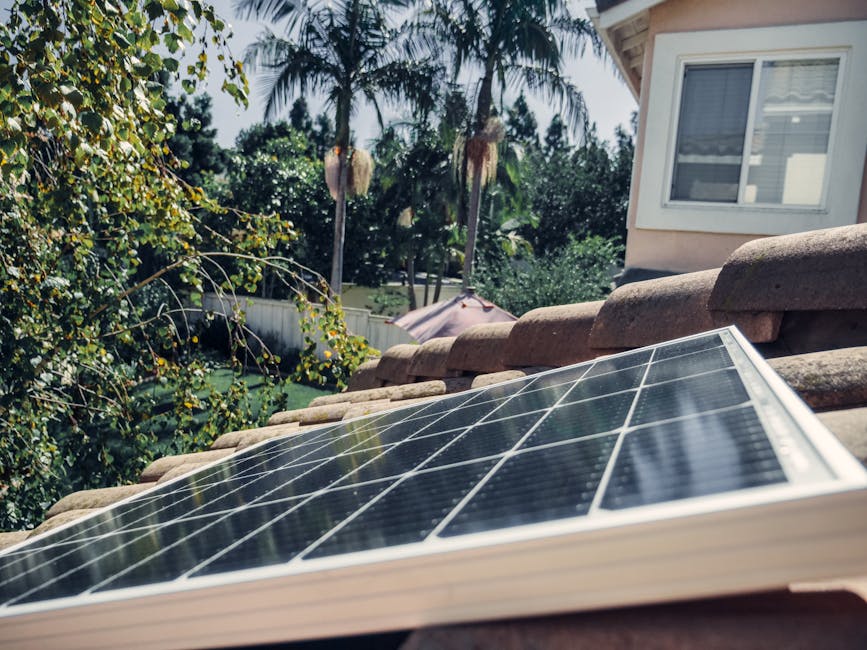
Step 4: Optimizing System Efficiency for the South Bay Climate
It is a common misconception that solar panels love heat. In reality, solar panels are electronic devices, and like your laptop or phone, they actually prefer to stay cool. Understanding the “temperature coefficient” is key to Going Green effectively in our climate.
Balancing heat and sunlight hours
Solar panels are typically tested at 77°F. For every degree above that, they lose a small percentage of efficiency (usually 0.3% to 0.5% per degree). On a 95°F summer day in Torrance, a rooftop can easily reach 150°F, which can lead to a 10-15% drop in panel efficiency.
However, don’t let that discourage you! Even with this slight efficiency loss, the sheer number of sunlight hours in the summer far outweighs the heat impact. A panel operating at 85% efficiency for 14 hours will still produce significantly more power than a panel operating at 100% efficiency for only 9 hours in the winter. This principle applies to residential rooftops and Solar for Commercial Property alike.
Maintenance for peak summer performance
To ensure you are getting the absolute maximum out of your system during these high-value months, a little maintenance goes a long way.
- Cleaning: Dust, sea salt spray (common in the South Bay), and spring pollen can create a film over your panels, blocking sunlight. Cleaning your panels in early June can increase production by 5-10%.
- Shading Analysis: Trees grow! A branch that didn’t shade your panels last summer might be a problem this year.
- System Check: Ensure your inverter is communicating properly and there are no “fault” lights.
Following Your Step-by-Step Guide to Commercial Solar Setup or residential maintenance schedules ensures that no kilowatt-hour is left on the table.
How solar panels reduce your summer electricity costs through Financial Incentives
The transition to solar is made much easier by a variety of incentives that accelerate your Return on Investment (ROI). The most significant of these is the Federal Investment Tax Credit (ITC), which currently allows you to deduct 30% of the cost of your solar and battery system from your federal taxes.
When you factor in these incentives, you’re not just saving on your monthly bill; you’re building equity. This is a vital part of Maximizing Your Commercial Solar ROI in the South Bay.
Accelerating the solar payback period
The “payback period” is the time it takes for your utility savings to equal the cost of the system. For a typical 6.6 kW system, the payback period is often around 4.4 to 6 years. Because summer production is so high, homeowners who install their systems in the spring often see their payback period accelerate because they start their solar journey with several months of massive “energy wins.”
Over the lifetime of a system (25+ years), most solar shoppers save between $10,000 and $30,000. For more details on the financial mechanics, see A Complete Guide to Commercial Solar Financing.
Increasing property value in California
Beyond monthly savings, solar panels are a tangible asset. Studies from Zillow and other real estate leaders have shown that homes with solar panels sell for approximately 4% more on average than those without. In the competitive South Bay real estate market, a solar-equipped home is a “sustainable asset” that attracts buyers looking for long-term cost certainty. This value increase is another way How Solar Power Makes Your Business More Sustainable and your home more valuable.
Frequently Asked Questions about how solar panels reduce your summer electricity costs
Do solar panels work better in spring or summer?
Interestingly, May is often the “goldilocks” month for solar. In May, we have very long days but the air temperature is still relatively cool. This allows panels to operate at peak efficiency. While July and August have the most total sun hours, the high heat causes a slight efficiency drop. However, both seasons are considered “peak production” and are when you will see the most dramatic bill reductions.
How long does it take for solar to pay for itself?
As of May 2026, the average payback period for a residential system in the South Bay is roughly 5 to 7 years. This varies based on your specific utility rate, the size of your system, and how much of your own power you consume (self-consumption). Businesses often see even faster returns due to different tax structures, which is Why Your Business Needs Commercial Solar Services in Palos Verdes.
Can solar panels keep my AC running during a power outage?
Only if you have a battery backup and a specialized “islanding” inverter. Standard solar systems are designed to shut off during an outage to prevent back-feeding electricity into the grid while utility workers are making repairs. With an integrated battery system, you can Enjoy Cleaner Greener Heat and cooling even when the grid is down.
Conclusion: Take Control of Your Summer Energy Future
How solar panels reduce your summer electricity costs is no longer a mystery—it’s a combination of smart technology, favorable California policies, and our abundant South Bay sunshine. By offsetting your AC usage, banking credits through net metering, and utilizing battery storage, you can turn the hottest months of the year into your most profitable ones.
At B&M Electric, we bring over 50 years of local expertise to every project. We aren’t just solar installers; we are licensed electrical professionals who understand the intricate wiring of Torrance and South Bay homes. We ensure your solar-electrical integration is safe, code-compliant, and optimized for maximum ROI.
Don’t let another summer of skyrocketing utility bills pass you by. Schedule your professional solar-electrical integration today and start enjoying the peace of mind that comes with a solar-powered home.