How to Test Outdoor Outlets and GFCI Before Summer
By B&M Electric July 16, 2026
Is Your Outdoor Power Ready for Summer? Here’s How to Check
Knowing how to test your outdoor outlets and GFCI before summer could be the most important home safety step you take this season. Before you plug in the patio lights, pool pump, or power tools, your outdoor outlets deserve a quick but careful look — especially after a wet winter or rainy spring.
Quick Answer: How to Test Outdoor Outlets and GFCI Before Summer
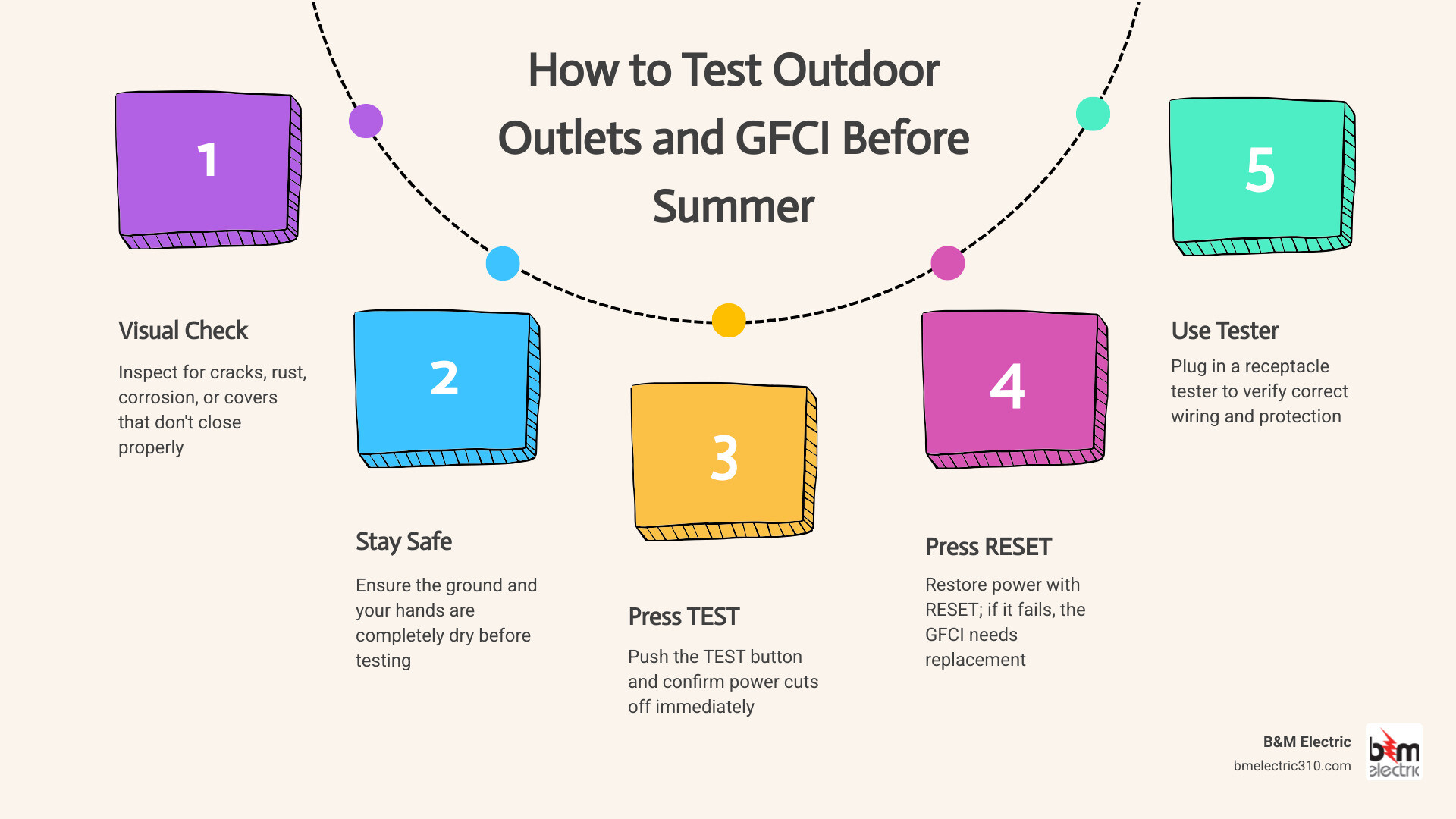
- Do a visual check — Look for cracks, rust, corrosion, or covers that don’t close properly.
- Keep conditions safe — Make sure the ground is dry and your hands are dry before testing.
- Press the TEST button — Power to the outlet should cut off immediately.
- Press the RESET button — Power should restore. If it doesn’t, the GFCI has failed.
- Use a plug-in outlet tester — This confirms correct wiring and detects issues like open grounds.
- Check for upstream protection — If your outdoor outlet has no TEST/RESET buttons, look for a GFCI in your garage, bathroom, or utility area that controls it.
- Call a licensed electrician — If the outlet trips repeatedly, won’t reset, smells burnt, or shows visible damage.
Here’s why this matters: outdoor outlets face moisture, temperature swings, and UV exposure year-round. According to the National Electrical Code (NEC 210.8(A)), every 125-volt outdoor receptacle must have GFCI protection — no exceptions. And yet many homeowners go years without testing theirs. A GFCI that has tripped repeatedly after wet weather can fail silently — still passing power while offering zero shock protection.
For homeowners in Torrance and across the South Bay, summer brings increased outdoor electrical use right after the season most likely to cause hidden damage. That combination makes a pre-summer check essential, not optional. For a broader look at getting your home’s electrical system ready for the season, see our Quick Start Guide to Spring Electrical Safety.
Why Spring is the Perfect Time for Outdoor Electrical Safety Checks
As we transition from the damp spring into the warm summer months of June 2026, our outdoor spaces become the focal point of daily life. Patios in Redondo Beach, backyards in Manhattan Beach, and decks in Palos Verdes are prepped for string lights, electric grills, sound systems, and water features. However, before you plug any of these devices into your exterior receptacles, a safety check is vital.
During the cooler winter and spring months, outdoor electrical boxes endure a quiet but destructive process. Cool nights followed by warm days create condensation inside protective covers and outlet boxes. This moisture buildup can slowly break down seals, degrade insulation, and cause hidden corrosion on live electrical components.
Furthermore, the National Electrical Code (NEC 210.8(A)) strictly mandates GFCI (Ground Fault Circuit Interrupter) protection for all outdoor 125-volt receptacles. GFCIs are designed to monitor the balance of electrical current between the hot and neutral wires. If a current imbalance as small as 5 milliamperes is detected—which often happens when electricity escapes through water or a human body—the GFCI trips and cuts off the power in milliseconds to prevent a fatal shock.
Because outdoor GFCIs are constantly exposed to the elements, they fail significantly more often than indoor ones. Testing them in the spring ensures they are fully functional before the high-demand summer season begins. For more insights on keeping your exterior spaces secure, check out our guide on Outdoor Electrical Safety Tips.
How to Test Your Outdoor Outlets and GFCI Before Summer: A Step-by-Step Guide
Testing your exterior electrical system is a straightforward process, but it requires a methodical approach to ensure accuracy and personal safety. By following these steps, you can confidently verify that your family is protected from shock hazards. For a deeper dive into outdoor safety measures, see our article on how to Stay Grounded with These Outdoor Electrical Safety Tips.
Preparing Safely: What to Do Before You Begin
Before touching any electrical device, you must ensure your immediate environment is safe. Water and electricity are a deadly combination, and even a simple test can be hazardous if proper precautions are ignored.
- Check the Ground: Ensure the ground where you are standing is completely dry. Never stand on wet grass, damp soil, or a puddled patio while testing outlets.
- Dry Your Hands: Ensure your hands are completely dry before touching any electrical covers or buttons.
- Perform a Visual Check: Without removing the outlet cover, inspect the exterior housing. Look for cracks in the plastic, missing rubber gaskets, or visible rust around the screws. Ensure that no landscaping, vines, or overgrown bushes are pushing against the outlet box, as trapped foliage retains moisture and accelerates decay.
- Confirm the Outlet Type: Make sure the receptacle is appropriate for outdoor use. For more details on choosing the right hardware, read about how to Choose the Best Outdoor Electrical Outlets.
The Push-Button Method: How to Test Your Outdoor Outlets and GFCI Before Summer
If your outdoor outlet has built-in TEST and RESET buttons, you can perform a quick functional test directly on the face of the receptacle.
- Plug in a simple device: Plug a small, working item (like a nightlight or a phone charger) into the outlet to verify that power is currently flowing.
- Press the TEST button: Press the “TEST” button on the face of the GFCI. You should hear a distinct click.
- Verify power interruption: The plugged-in device should turn off instantly. This confirms that the GFCI mechanism successfully tripped and cut the circuit in milliseconds.
- Press the RESET button: Press the “RESET” button until it clicks and locks into place. The plugged-in device should turn back on.
If the TEST button does not trip the outlet, or if the RESET button refuses to stay depressed, the GFCI has failed and must be replaced immediately. To understand the mechanics of this safety device, learn more about Upgrading to GFCI Outlets.
Using a Plug-In Tester: How to Test Your Outdoor Outlets and GFCI Before Summer Safely
While the push-button test is helpful, it only tests the internal mechanism of that specific GFCI. It does not tell you if the outlet is correctly wired or grounded. A digital receptacle tester (often called a three-prong plug tester) provides a complete picture of your outlet’s health.
- Insert the tester: Plug your receptacle tester directly into the outdoor outlet.
- Read the light pattern: Look at the diagnostic lights on the tester. A key on the side of the device will tell you what the light patterns mean. A correct reading will show two amber lights (on standard testers), indicating correct polarity and a solid ground connection.
- Check for “Open Ground”: If the tester indicates an “open ground,” the outlet is not properly grounded. This is a severe hazard, especially outdoors where damp soil increases shock risks.
- Test the GFCI function: Many plug-in testers have their own small GFCI test button. Pressing this button should trip the GFCI upstream. If it does not trip, there may be a wiring error or a failed device.
- Identify hidden upstream GFCIs: If your outdoor outlet does not have TEST and RESET buttons, it may be protected by an upstream GFCI located in your garage, laundry room, bathroom, or even a breaker in your main electrical panel. Use the plug-in tester to confirm that tripping the upstream GFCI successfully cuts power to the outdoor outlet.
Recognizing the Signs of Winter Weather and Moisture Damage
Because outdoor outlets are subjected to South Bay coastal moisture, salty air, and seasonal rains, they can degrade rapidly. Sometimes, an outlet will pass a basic push-button test but still possess dangerous internal damage.
Look closely for these warning signs of weather and moisture damage:
- Rust and Corrosion: Check the mounting screws, the faceplate, and the internal contacts. If you see green or white powdery corrosion, or orange rust, moisture has penetrated the seal.
- Physical Cracks: Sunlight and heat degrade plastic covers over time. Cracks in the protective bubble cover or the outlet faceplate allow wind-driven rain to seep directly into the wiring.
- Buzzing, Sizzling, or Hissing Sounds: If you hear any noise coming from the outlet when a device is plugged in (or even when it is idle), turn off the breaker immediately. This indicates active electrical arcing, which is a major fire hazard.
- Warmth to the Touch: If the outlet cover plate feels warm, there is likely a loose connection or high resistance inside the box causing heat buildup.
- Discoloration or Scorch Marks: Any darkening, yellowing, or black soot marks around the plug slots mean the outlet has experienced severe overheating.
Upgrading Your Protection: Weather-Resistant (WR) Outlets and Bubble Covers
If your pre-summer inspection reveals that your outdoor outlets are worn, outdated, or lacking proper protection, upgrading them is essential. Modern electrical codes require two key components for outdoor receptacles: Weather-Resistant (WR) ratings and in-use bubble covers.
A Weather-Resistant (WR) outlet is constructed with UV-stabilized plastics and corrosion-resistant metallic components. These devices are specifically designed to withstand the harsh effects of direct sunlight, extreme temperatures, and persistent humidity without cracking or rusting.
The cover you choose is just as important as the outlet itself. Older homes often feature standard flat metal covers with spring-loaded flaps. While these protect the outlet when nothing is plugged in, they leave the receptacle entirely exposed to rain and moisture the moment you plug in a string of patio lights or a pool pump.
Current codes require an in-use weatherproof cover (often called a bubble cover). These deep, plastic enclosures feature a clear, protective dome that snaps shut over the cord while it is plugged in, keeping the entire connection sealed against moisture.
| Cover Feature | Standard Flat Cover | In-Use Bubble Cover |
|---|---|---|
| Protection When Unplugged | Yes | Yes |
| Protection When Plugged In | No (Flaps stay open) | Yes (Sealed dome covers plug) |
| Code Compliance (Wet Locations) | Non-compliant for active use | Mandatory under modern NEC |
| UV and Moisture Resistance | Moderate (Metal can rust) | High (Heavy-duty stabilized plastic) |
Troubleshooting: What to Do When Your Outdoor GFCI Fails or Trips Repeatedly
If your outdoor GFCI trips the moment you plug something in, or if it trips repeatedly during humid mornings, it is doing its job. It is warning you of a “ground fault”—an unintended path between the electrical current and a grounded surface (like water or moisture).
Here is how to troubleshoot a troublesome outdoor outlet:
- Unplug all devices: Disconnect every cord from the outdoor circuit. If the GFCI resets and stays on, the problem lies in one of the appliances, extension cords, or string lights you plugged in, not the outlet itself.
- Inspect the cords: Check your extension cords for nicks, tears, or damp plug ends. Never lay extension cord connections directly on wet grass or near sprinkler heads.
- Isolate the circuit: If the GFCI continues to trip with absolutely nothing plugged into it, there is likely moisture trapped inside the outlet box itself, or a wire connection has corroded and loosened.
- Let it dry: Sometimes, a wet storm will cause a temporary fault. If the box dries out completely, the GFCI may reset. However, if moisture got in once, it will get in again. The seals, gaskets, or cover must be inspected and replaced.
- Do not force a reset: Never tape or force a GFCI button to stay in the “RESET” position. This bypasses the safety mechanism and can lead to a catastrophic electrical fire or severe shock.
For a comprehensive look at why these devices fail and how to address them safely, read our detailed guide on GFCI Outlets That Keep Tripping. If you suspect your home’s exterior wiring needs an upgrade to meet local standards, review our Outdoor Outlets Installation Torrance Guide.
Frequently Asked Questions About Outdoor GFCI Outlets
Why does my outdoor outlet stop working after heavy rain?
When heavy rain or high coastal humidity hits, water can seep behind worn gaskets or cracked covers, creating a temporary path to the ground inside the electrical box. The GFCI detects this immediate hazard and trips to prevent a fire or shock. Once the moisture evaporates, the outlet may allow a reset, but this is a clear warning sign that your weatherproof cover or seals have failed and need professional attention.
Can one indoor GFCI outlet protect all my outdoor outlets?
Yes. A single GFCI outlet (usually located in a garage, utility room, or bathroom) can be wired to protect multiple standard “downstream” outlets located on the exterior of your home. If your outdoor outlets stop working and have no buttons on them, always check your indoor spaces for a tripped GFCI. However, if that primary upstream GFCI fails or is wired incorrectly, all downstream outdoor outlets lose their shock protection entirely.
How long do outdoor GFCI outlets typically last?
While indoor GFCI outlets can last up to 10 to 15 years, outdoor GFCIs exposed to the elements typically have a lifespan of 5 to 8 years. Over time, salt air, humidity, and temperature shifts degrade the sensitive internal circuitry. Because these devices can fail “silently”—meaning they still supply power but will no longer trip during a ground fault—regular monthly testing is essential.
Conclusion
Taking a few minutes to learn how to test your outdoor outlets and GFCI before summer ensures your home, patio, and pool areas remain safe and fully functional for the sunny months ahead. Electrical safety is not something to leave to chance, especially when moisture and high-powered summer appliances are involved.
If your pre-summer checks reveal rusted terminals, cracked covers, or a GFCI that simply refuses to reset, it is time to call in the experts. At B&M Electric, we have spent over 50 years providing dependable residential electrical services with a personal touch across Torrance, Redondo Beach, Palos Verdes, and Manhattan Beach. Our licensed electricians can perform a thorough safety audit, replace worn receptacles with weather-resistant upgrades, and ensure your home is fully code-compliant.
Don’t let a faulty outlet put a damper on your summer fun. Schedule your professional outdoor electrical safety audit with B&M Electric today, or give us a call during our standard business hours (Monday through Friday, 8 AM to 5 PM) to speak with a friendly member of our local team.