How to Troubleshoot Frequent Circuit Breaker Trips
By B&M Electric July 15, 2026
How to Troubleshoot Frequent Circuit Breaker Trips
Why a Circuit Breaker Tripping Frequently Is a Warning You Shouldn’t Ignore
If you’re dealing with a circuit breaker tripping frequently, what to check comes down to a handful of common causes — and knowing where to start can save you time, frustration, and potentially a serious safety hazard.
Quick Answer: Circuit Breaker Tripping Frequently — What to Check
- Too many devices on one circuit — Unplug high-wattage appliances and see if the breaker holds.
- A short circuit — Look for burnt smells, scorch marks, or a breaker that trips instantly.
- A ground fault — Check for tripped GFCI outlets in kitchens, bathrooms, or outdoor areas.
- A faulty appliance — Plug devices back in one at a time to find the culprit.
- An aging or worn breaker — A breaker that won’t reset or feels warm may need replacement.
- Hidden wiring issues — Flickering lights, buzzing, or repeated trips with nothing plugged in signal a deeper problem.
- An overloaded panel — Older homes in Torrance and the South Bay may have panels not designed for today’s electrical demands.
Your circuit breaker is not the problem — it’s the messenger. It’s a safety device built to shut off power before your wiring overheats and causes a fire. According to the U.S. Consumer Product Safety Commission, electrical wiring failures contribute to an estimated 51,000 home fires every year in the United States. When your breaker keeps tripping, it’s telling you that something in your home’s electrical system is operating outside safe limits.
For homeowners in Torrance and the South Bay, repeated breaker trips are one of the most common reasons people call B&M Electric. Whether it’s an overloaded kitchen circuit, outdated wiring, or a panel that’s seen better days, the pattern of tripping — when it happens, how often, and on which circuit — tells a story that a licensed electrician knows how to read.
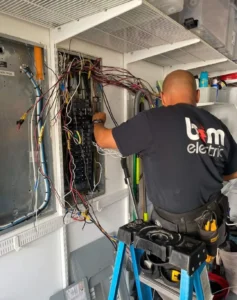
Circuit Breaker Tripping Frequently: What to Check First
When you are faced with Frequent Circuit Breaker Trips, your first instinct might be to walk over to the panel and flip the switch back on. While that restores power temporarily, doing so repeatedly without investigating the root cause is highly risky. Every time a breaker trips, it is reacting to an electrical anomaly that could cause permanent damage to your appliances or, worse, ignite a fire behind your walls.
To troubleshoot effectively, we must first look at the pattern of the trip. Does the breaker trip the exact second you flip it back on? Or does it hold for a few minutes before quietly switching off? Does it only happen when you use a specific appliance, like your hair dryer or a portable space heater? Paying attention to these clues is the fastest way to narrow down the list of Common Circuit Breaker Problems in your home.
Understanding the Primary Causes of a Tripping Breaker
Before we dive into the physical checks, let’s demystify the four distinct electrical phenomena that cause a circuit breaker to trip:
- Circuit Overload: This is the most common and least dangerous cause. It happens when you try to draw more electrical current (measured in amps) than the circuit is designed to handle. Think of it like trying to squeeze a gallon of water through a straw all at once; the system gets congested, heats up, and the thermal element in the breaker trips to protect the wire.
- Short Circuit: A short circuit occurs when a “hot” wire (which carries the current) directly touches a “neutral” wire. This bypasses the normal resistance of your appliances, causing an immediate, massive spike in current. The magnetic trip mechanism in the breaker detects this instant surge and shuts off the power in milliseconds to prevent a fire.
- Ground Fault: Similar to a short circuit, a ground fault happens when a hot wire comes into contact with a ground wire or a grounded portion of the system, such as a metal outlet box or copper pipe. Because electricity always seeks the path of least resistance to the earth, this creates an unsafe path of high current, triggering the breaker or a specialized GFCI device.
- Arc Fault: An arc fault is an unintended electrical discharge or spark between damaged conductors. This is often caused by loose wire connections, cracked wire insulation, or a nail driven through a wire behind a wall. Arc Fault Circuit Interrupters (AFCIs) are designed to detect these hazardous sparks before they can start a fire.
Circuit Breaker Tripping Frequently: What to Check on Your Appliances
If your breaker trips after a slight delay, the most logical place to start your inspection is with the appliances currently plugged into that circuit. Modern household electronics and high-wattage appliances put an immense strain on older electrical systems.
- Look for High-Draw Culprits: High-wattage appliances like hair dryers, space heaters, toaster ovens, microwaves, and portable air conditioners are notorious for overloading standard 15-amp kitchen or bathroom circuits. A standard hair dryer can draw up to 1,800 watts, which is the absolute maximum capacity of a 15-amp circuit.
- Account for Startup Surges: Large appliances with compressors, such as refrigerators, draw a massive “startup surge” that can be three to four times their normal running wattage. If your refrigerator shares a circuit with other items, that sudden startup surge is often enough to trip the breaker.
- Inspect Power Cords and Plugs: Unplug the appliances on the affected circuit and examine their power cords. Look for frayed wires, melted plastic around the plug prongs, or discoloration. A damaged power cord can easily cause an intermittent short circuit.
Overload vs. Short Circuit vs. Ground Fault
To help you visualize the differences between these three common electrical issues, we have put together a quick comparison table. Understanding these differences is key to spotting Electrical Warning Signs to Watch For in your home.
| Feature | Circuit Overload | Short Circuit | Ground Fault |
|---|---|---|---|
| Primary Cause | Too many devices drawing power simultaneously. | Hot wire contacts neutral wire directly. | Hot wire contacts ground wire, metal box, or water. |
| Trip Timing | Delayed (takes seconds to minutes to trip). | Instantaneous (trips the second the switch is flipped). | Instantaneous (trips immediately, often involving a GFCI). |
| Physical Signs | Warm outlets, dimming lights, breaker switch feels warm. | Burning smell, sparks, visible scorch marks on outlets. | Often occurs in wet areas (kitchen, bath, outdoors); potential shock. |
| Risk Level | Moderate (can lead to fire if ignored). | High (immediate fire hazard, risk of sparks). | High (severe risk of electrical shock or electrocution). |
| Primary Solution | Unplug devices; redistribute the electrical load. | Locate damaged wiring or appliance; call an electrician. | Test GFCI outlets; inspect for moisture or damaged insulation. |
When a circuit is functioning normally, electricity flows through the hot wire to your appliance, does its work, and returns safely through the neutral wire. If that path is disrupted, the safety mechanisms in your panel are forced to step in.
How to Safely Troubleshoot and Reset a Tripped Breaker
If you are comfortable performing a basic diagnostic check, you can safely troubleshoot a tripped breaker yourself before calling in the professionals. However, safety must always come first. Never attempt to open the main cover of your electrical panel or touch any internal wiring. If you need help with deeper diagnostics, it is always best to consult Electrical Troubleshooting Experts who have the right safety gear and training.
Step-by-Step Safe Troubleshooting Guide
Follow these steps to safely isolate the problem:
- Unplug Everything: Go to the area of your home that lost power and unplug every single appliance, lamp, and electronic device from the affected outlets. Turn off all light switches on that circuit.
- Locate the Tripped Breaker: Open your electrical panel door. Look for a breaker switch that is not fully in the “ON” position. Tripped breakers usually rest in the middle position, or they may have a small red indicator window showing.
- Stand to the Side: For safety, always stand to the side of the panel and look away when flipping switches. This protects your eyes in the rare event of an electrical arc.
- Perform a Full Reset: Push the tripped breaker switch firmly to the “OFF” position first. You should hear a distinct click. Once it is fully off, flip it firmly back to the “ON” position.
- Test the Circuit Empty: Wait a minute or two. If the breaker trips immediately with absolutely nothing plugged in, you have a short circuit or a ground fault in your home’s structural wiring. Leave it off and call an electrician.
- Reconnect Devices Sequentially: If the breaker holds, go back and plug your devices in one at a time. Turn them on one by one, waiting a minute between each. If the breaker trips the moment you plug in a specific appliance, you have found your culprit—that appliance has an internal short circuit or is overloading the circuit.
How GFCI Outlets Affect Breaker Tripping and How to Test Them
Ground Fault Circuit Interrupters (GFCIs) are specialized outlets installed in wet areas like kitchens, bathrooms, garages, and outdoors. They monitor the balance of electrical current between the hot and neutral wires. If they detect an imbalance as small as 4 to 6 milliamperes—indicating that electricity is leaking to the ground (potentially through a person)—they shut off the power in about 1/40th of a second. GFCIs prevent roughly 70% of all home electrocutions each year.
Sometimes, a tripped GFCI outlet can cut power to several standard outlets downstream from it, making it look like a circuit breaker has tripped when it hasn’t.
- Check the Reset Button: If you lose power in your bathroom or kitchen, locate the GFCI outlet in that room and press the “RESET” button. If it clicks and the power returns, the issue was localized to that outlet.
- Test Monthly: Press the “TEST” button on your GFCI outlets once a month. The “RESET” button should pop out, and the power should cut off. Press “RESET” to restore power. If the button doesn’t pop out or won’t reset, the GFCI outlet is faulty and needs to be replaced.
Is It a Faulty Breaker or a Hidden Wiring Issue?
If you have gone through the troubleshooting steps and found that the breaker trips even when nothing is plugged in, you are likely dealing with a faulty breaker or a hidden wiring issue behind your walls.
Like any mechanical device, circuit breakers wear out over time. Standard breakers typically have a lifespan of 30 to 40 years. Frequent tripping and resetting can wear down the internal spring mechanism, causing the breaker to trip at much lower current levels than it is rated for.
Furthermore, older homes in Torrance and the South Bay built between the 1960s and 1970s may still have outdated electrical components. For instance, homes with aluminum wiring are 55 times more likely to have connections that reach fire-hazard conditions compared to homes wired with copper. If your home has aging components, it is crucial to recognize the Signs You Need an Electrical Panel Upgrade to keep your family safe.
If you are constantly resetting switches, your Electrical Panel Needs an Upgrade to keep pace with modern electrical demands safely.
Circuit Breaker Tripping Frequently: What to Check for Aging Components
To determine if your breaker itself is failing or if there is a loose connection in the panel, check for these warning signs:
- A Warm Panel: Touch the plastic casing of the breaker switch (do not touch the metal parts inside the panel). If the breaker feels hot or warm to the touch, it is struggling to handle the electrical load and must be inspected immediately.
- A Burning Smell: If you smell a distinct plastic or metallic burning odor coming from your electrical panel, shut off the main breaker immediately and call an electrician. This is a clear sign of arching or melted insulation.
- Buzzing or Crackling Noises: A healthy breaker operates silently. If you hear a low buzzing, humming, or crackling sound coming from the panel, it usually points to a loose wire connection or a failing contact point inside the breaker.
- Physical Damage: Look for signs of scorching, black soot, or melted plastic around the breaker itself or on the bus bar behind it.
The Risks of Ignoring Repeated Breaker Trips and How to Prevent Them
Ignoring a breaker that trips frequently is a massive gamble. Because overloaded circuits account for approximately 30% of all residential electrical fires in the United States, treating a tripping breaker as a mere inconvenience is incredibly dangerous. Every time you force a breaker to reset without fixing the underlying problem, you risk damaging sensitive electronics and accelerating the degradation of your home’s wiring.
To protect your home, you must focus on proactive solutions like Resolving Overloaded Electrical Panels and investing in Electrical Repairs for a Safe Home.
When to Call a Licensed Electrician in the South Bay
While basic troubleshooting is perfectly fine for homeowners, you should stop and call a licensed electrician immediately if you experience any of the following:
- The breaker trips the absolute millisecond you turn it back on.
- You smell burning plastic, see smoke, or notice scorch marks on your outlets or electrical panel.
- The breaker trips when absolutely nothing is plugged into the circuit.
- Your lights flicker constantly or dim significantly when large appliances (like your refrigerator or air conditioner) kick on.
- You live in an older South Bay home with a legacy electrical panel that hasn’t been inspected in over a decade.
Knowing the Top Signs You Need an Electrician can prevent a minor inconvenience from turning into a major hazard. If your home is showing these symptoms, don’t wait to address the Signs Your Home Needs Electrical Repair.
How Professional Electricians Diagnose Hidden Panel Problems
When our licensed electricians at B&M Electric arrive at your Torrance home to diagnose a tripping breaker, we don’t rely on guesswork. We use advanced diagnostic tools to pinpoint the exact location of the issue without unnecessarily opening up your walls:
- Thermal Imaging: We use infrared thermal cameras to scan your electrical panel and outlets. This allows us to instantly see “hot spots” caused by loose connections, overloaded circuits, or failing breakers that are invisible to the naked eye.
- Insulation Resistance Testing: Using specialized megohmmeters, we test the integrity of the insulation surrounding your wires. This helps us find hidden wire damage caused by rodents, aging, or nails driven into walls.
- Load Calculation: We measure the actual amperage draw on your circuits under full load to determine if your household electrical demands have simply outgrown your panel’s capacity.
Frequently Asked Questions About Tripping Breakers
Why does my breaker only trip during the summer?
During the warm South Bay summers, air conditioning units run continuously, putting a massive load on your electrical system. Additionally, high ambient temperatures inside unventilated garages or utility closets can heat up the thermal bimetal strip inside your circuit breakers, reducing their thermal margin and causing them to trip at lower current levels than normal.
Can a frequently tripping breaker damage my electronics?
Yes. While the breaker trips to protect your home’s wiring, the sudden power cutting (known as hard power cycling) can corrupt data on computers, damage sensitive circuit boards in modern smart TVs, and cause voltage fluctuations that wear down your appliances over time. Using high-quality surge protectors is highly recommended for sensitive devices.
How often should my home electrical panel be inspected?
We recommend having a professional electrical safety audit and panel inspection at least once every 10 years. However, if your home is more than 30 years old, or if you have recently completed a major remodel or added high-draw appliances (like an EV charger), an annual inspection is the best way to prevent hidden hazards.
Conclusion
A circuit breaker that keeps tripping is your home’s early warning system doing its job. By understanding what to check—from simple appliance overloads to hidden ground faults—you can keep your household running safely and smoothly.
When DIY troubleshooting isn’t enough, you need a team you can trust. Since 1974, B&M Electric has provided dependable electrical services with a personal touch to homeowners and businesses throughout Torrance, CA, and the surrounding South Bay communities. Backed by over 50 years of local expertise, our clean, professional, and licensed electricians are here to handle everything from minor repairs to complete panel upgrades with precision and care.
If you are tired of dealing with a stubborn, frequently tripping breaker, let us restore your peace of mind. Contact us today during our standard business hours (Monday through Friday, 8 AM to 5 PM) to schedule your professional diagnostic visit.