Is Upgrading to LED Worth the Investment or Just a Light Bulb Moment?
By B&M Electric May 27, 2026
Looking to Upgrade Lighting in Torrance or the South Bay? Here’s What to Know About LED Savings
How much does switching to LED actually save is one of the most practical questions a homeowner or property owner can ask when planning a lighting upgrade.
Quick Answer: How Much Can You Save by Switching to LED?
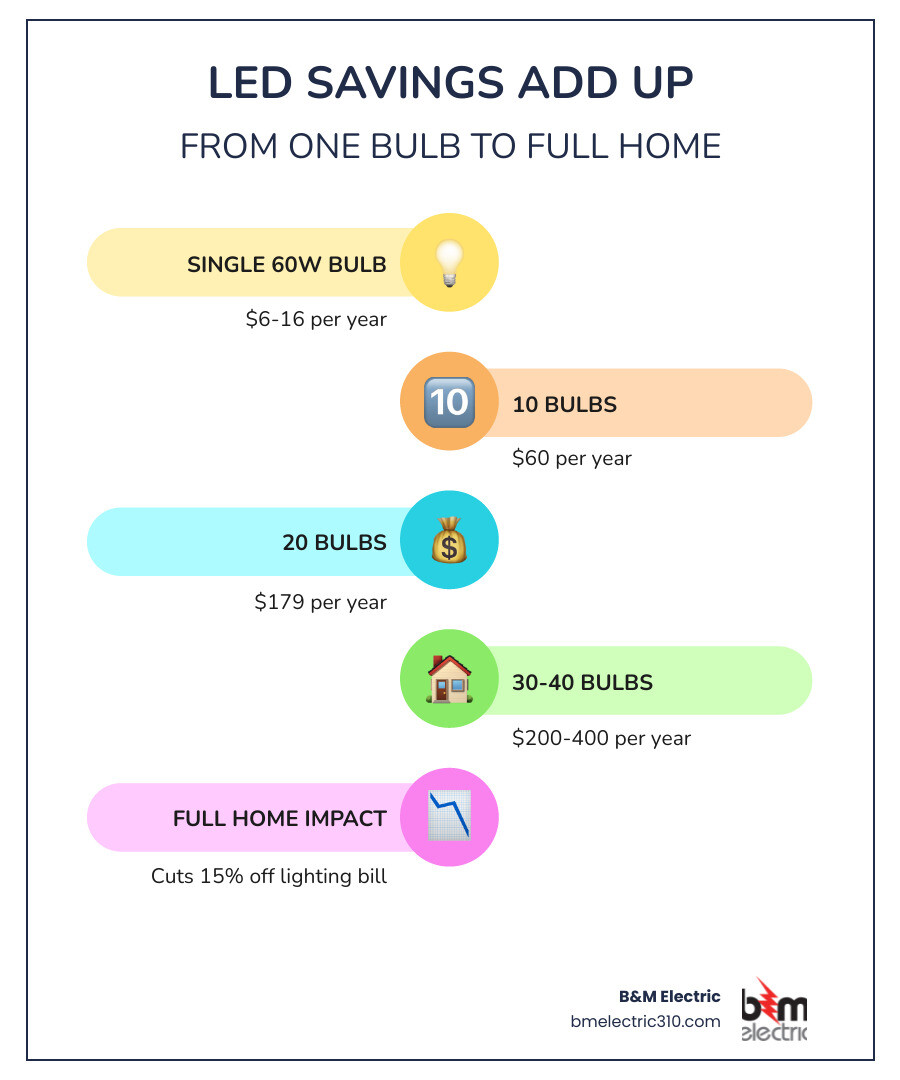
| Scenario | Typical Reduction in Lighting Energy Use |
|---|---|
| Single 60W bulb replaced | Significant drop in wattage |
| 10 bulbs replaced | Noticeable whole-home lighting reduction |
| 20 bulbs replaced | Stronger impact in high-use areas |
| Average home (30-40 bulbs) | Meaningful overall lighting efficiency improvement |
| Frequently used exterior or interior fixtures | Faster results due to longer daily runtime |
Lighting makes up a meaningful portion of a home’s electricity use. When you consider that many homes have dozens of light sockets — and that older incandescent bulbs waste much of their energy as heat rather than light — the opportunity to improve efficiency is very real.
For homeowners and property owners in Torrance and the South Bay, switching to LED can be a practical way to improve everyday lighting performance while reducing wasted energy. The math is straightforward, but the real impact depends on a few key factors: how many bulbs you have, how long they run each day, and which fixtures are used the most.
This guide walks through how LED savings work — from a single bulb swap to a whole-home or commercial lighting upgrade — so you can make a confident, informed decision about your property.
How Much Does Switching to LED Actually Save Compared to Older Bulbs?
In plain terms, LEDs usually deliver the same brightness while using far less electricity than older lighting types. That is the whole reason the savings work.
A good way to compare bulbs is by lumens, not watts. Lumens tell you how much light you get. Watts tell you how much electricity the bulb uses to produce it. So if two bulbs both give you about 800 lumens, the one using fewer watts is the more efficient option.
Here is the big-picture comparison:
| Bulb Type | Typical Energy Use for Similar Light Output | Notes |
|---|---|---|
| Incandescent | Highest | Most energy lost as heat |
| CFL | Moderate | Older efficiency option |
| Fluorescent | Lower than incandescent, higher than LED | Common in offices and garages |
| LED | Lowest | Long life, low heat, high efficiency |
Compared to incandescent bulbs, LEDs are the clear winner for efficiency. Research consistently shows LED bulbs use far less energy, and the difference is often dramatic depending on the bulb being replaced.
Compared to CFLs, the efficiency gain is more modest. CFLs were a good step forward years ago, but LEDs generally last longer, turn on instantly, dim better when matched correctly, and avoid the mercury issue that comes with CFL disposal.
Compared to fluorescent tubes and fixtures, LEDs are also more efficient while also helping reduce flicker, hum, and maintenance needs.
How much does switching to LED actually save for one common 60W bulb?
This is the easiest example because it is so common in homes.
A typical old 60W incandescent bulb can usually be replaced by a 9W LED that produces about the same light output, around 800 lumens.
That means you save 51 watts every hour the light is on.
If that bulb runs for several hours each day, the reduction in energy use becomes meaningful over time. In higher-use areas, even one bulb can make more impact than many people expect.
That may sound small at first, but one bulb is never just one bulb. It is a kitchen can light, a hallway fixture, a porch light, a bathroom vanity strip, and suddenly your small improvement turns into a noticeable whole-home lighting upgrade.
How much does switching to LED actually save across a full home?
This is where LED upgrades start to feel less like a small tweak and more like a smart system-wide improvement.
Useful benchmarks include:
- Replacing frequently used bulbs can meaningfully reduce lighting-related electricity use
- Homes with many recessed cans, exterior lights, or decorative multi-bulb fixtures often see the biggest impact
- A home with 30 to 40 bulbs may see a clear improvement in lighting efficiency after a full LED upgrade
- High-use fixtures usually deliver the fastest results
Those benefits can feel even more worthwhile in South Bay homes with extensive indoor lighting, outdoor lighting, garage fixtures, landscape lighting, or entry lights that run every evening.
If your home has closer to 50 sockets, which is not unusual, the total opportunity can be larger than expected. Most people underestimate how many bulbs they actually have until they start counting. It gets humbling around the third bathroom vanity.
The Real Math Behind LED Savings in Your Home or Business
The formula is simple:
Annual energy reduction per bulb = (old bulb wattage – LED wattage) x hours used per day x 365 / 1000
That formula works for homes, offices, retail spaces, and many commercial buildings.
For example, replacing a 60W incandescent with a 9W LED saves 51 watts. Multiply that by daily hours of use, and you can estimate the annual reduction in electricity use for that fixture.

LED savings depend on more than the bulb itself. The biggest drivers are:
- Wattage difference between old and new bulbs
- Hours of daily use
- Number of fixtures being replaced
There can also be a small extra benefit from lower heat output. Incandescent bulbs act like tiny heaters that happen to glow. LEDs run much cooler, which can slightly reduce indoor heat buildup during warm weather. In a Southern California climate, that cooling effect can add a little more value, especially in homes or businesses with many older bulbs.
The three biggest factors that change your LED savings
1. Daily runtime
A bulb used 30 minutes a day will not save much. A bulb used 5 to 8 hours a day absolutely will.
The best candidates are:
- Kitchen ceiling lights
- Bathroom vanity lights
- Hallway and stair lighting
- Porch and driveway lights
- Security lights
- Office lighting
- Retail displays
- Warehouse or parking area fixtures
2. Number of fixtures
One bulb does not move the needle much. Ten does. Twenty definitely does. Thirty or more can produce a meaningful reduction in your annual lighting load.
This is especially true in homes with:
- Recessed lighting
- Large kitchens
- Exterior pathway lights
- Landscape lighting
- Multi-bulb chandeliers
- Detached garages or workshops
3. Existing bulb type
The biggest improvements usually come from replacing incandescent or halogen bulbs. If a property already uses CFLs or efficient fluorescent lighting, the reduction may be smaller, though LEDs can still improve performance, longevity, and light quality.
Why some people switch to LEDs and barely notice a lower bill
This is a fair question, and it comes up often.
If LEDs are so efficient, why do some people say they switched and barely saw a difference?
Usually, one of these reasons is at play:
- They only replaced a few bulbs
- The bulbs replaced were low-use lamps
- They were already using CFLs or some efficient lighting
- Seasonal air conditioning or heating use overshadowed the lighting reduction
- Bigger energy users in the home, like HVAC, water heating, cooking, or laundry, dominated the bill
Lighting is only part of total electricity use. LEDs are effective, but they work best as part of a thoughtful upgrade plan focused on the fixtures that run the most.
Where to Replace Bulbs First for the Fastest Return
If you want the quickest payoff, do not start with the guest room lamp that gets used twice a month. Start with the long-runners.
Priority fixtures for LED upgrades:
- Kitchen ceiling fixtures
- Bathroom vanity bars
- Hallways and stairwells
- Living room cans used daily
- Porch lights
- Driveway and entry lights
- Security and floodlights
- Laundry room lights
- Garage fixtures
- Dusk-to-dawn exterior lighting
- Commercial office grids
- Retail lighting
- Warehouse high bays
- Parking and perimeter lighting
Best rooms and fixtures to prioritize at home
At home, the smartest first targets are the fixtures with the longest daily use and the highest old wattage.
Kitchen
Kitchen lights often run for hours every day. Recessed cans, island pendants, and ceiling fixtures can stack up quickly.
Bathroom
Bathroom vanity bars are sneaky energy users, especially if they have multiple bulbs. Four older bulbs over a mirror can use a surprising amount of power.
Living room
Main living areas often have several lamps or recessed lights on for long stretches in the evening.
Hallways and stairways
These fixtures are often used more than people realize, especially in multi-story homes.
Laundry and garage
Not always glamorous, but frequently used and worth upgrading.
Exterior entries and porch lights
These are some of the best LED candidates because they often run every evening. A dusk-to-dawn porch light can generate some of the fastest efficiency gains per socket.
For more ideas on fixture upgrades, our guide on Discover LED Lighting Solutions is a helpful next read.
Best commercial lighting upgrades for bigger savings
Commercial buildings often see even stronger results because the lights run longer and the maintenance needs are higher.
High-impact upgrades include:
- Office troffers and panel lights
- Retail display lighting
- Warehouse high bays
- Parking lot and exterior security lighting
- Back-of-house work areas
- Restroom and corridor fixtures
- Reception and lobby lighting
In commercial settings, the benefits are not just about energy use. Reduced maintenance matters too. Fewer bulb changes mean less disruption and less hassle in day-to-day operations.
For a deeper look, see Top Lighting Upgrades That Save Your Business Money.
Lifespan, Maintenance, and Total Value Beyond the Utility Bill
Energy savings get the headlines, but long life is a big part of the value story.
Typical lifespan ranges:
- Incandescent: about 750 to 1,000 hours
- LED: about 15,000 to 25,000 hours
- Many commercial LED fixtures: often much longer, depending on design
That means LEDs can last 15 to 25 times longer than old incandescent bulbs.
Why long LED life changes the true cost of lighting
A longer-lasting bulb reduces:
- Replacement frequency
- Maintenance time
- Hassle
- Trips up ladders
- Disruption in homes and businesses
This matters a lot in hard-to-reach places like:
- High foyer fixtures
- Stairwell lighting
- Exterior peaks
- Vaulted ceilings
- Parking structures
- Warehouse ceilings
In homes, that means more convenience. In businesses, it often means real labor savings. A bulb that lasts years instead of months or a couple of seasons changes the true cost of lighting in a very practical way.
LEDs are also more durable because they do not rely on fragile filaments. They generally handle vibration and normal switching better than traditional bulbs.
Environmental benefits that add financial value
LEDs also provide environmental value that supports long-term savings:
- Lower electricity use means lower associated emissions
- Reduced heat output may ease cooling demand
- Longer life means less landfill waste
- LEDs avoid the mercury concerns associated with CFL disposal
That environmental side is not just about feeling virtuous. It supports lower operating waste, fewer replacements, and smarter energy use overall.
If sustainability is part of your bigger home or business plan, you may also like Going Green and Green Energy Savings.
Do Smart LEDs, Dimmers, and Controls Save Even More?
Yes, but only in the right situations.
A standard LED already saves energy by using less wattage. Smart features can help you save even more by reducing unnecessary runtime.
Useful control options include:
- Scheduling
- Timers
- Motion sensors
- Occupancy sensors
- Daylight shutoff
- App control
- Dimming
- Vacation modes
When smart LEDs are worth it and when standard LEDs are enough
Smart LEDs are most useful in places where lights are often left on longer than needed.
Best use cases:
- Porch and driveway lights
- Vacation homes or travel periods
- Entry lights with set schedules
- Guest rooms
- Kids’ rooms
- Outdoor security lighting
- Commercial areas with predictable hours
Standard LEDs are usually enough when:
- The fixture is already switched off reliably
- The room sees short, intentional use
- You just want efficient light without extra features
In other words, smart bulbs can improve savings, but they do not automatically create huge bill reductions on their own. The biggest savings still come from replacing inefficient bulbs in high-use fixtures first.
Pairing LEDs with dimmers and timers for extra savings
Controls can stretch LED savings further when they are properly matched.
Dimmers can reduce output when full brightness is not needed, and timers can prevent lights from staying on all night by accident. Motion sensors are especially effective outdoors, in garages, and in lower-traffic commercial areas.
A few best practices:
- Use dimmable LED bulbs with compatible dimmers
- Choose controls rated for LED loads
- Add timers to exterior lighting
- Use occupancy sensors where lights are often forgotten
For more on this, explore Save Energy with Dimmer Switches and Discover LED Lighting Solutions.
Frequently Asked Questions About How Much Does Switching to LED Actually Save
Is it worth replacing CFL or fluorescent bulbs with LED?
Usually yes, but the savings are smaller than replacing incandescent bulbs.
If you are switching from CFL or fluorescent to LED, the energy reduction may be more modest compared to the dramatic incandescent-to-LED jump. Still, LEDs often offer:
- Better dimming performance
- Instant full brightness
- Longer life
- Lower maintenance
- No mercury in the bulb
- Better overall light quality in many applications
For homes, it usually makes sense to prioritize incandescent and halogen replacements first, then move on to CFLs and fluorescent fixtures as they age or where performance is poor.
How quickly do LED bulbs pay for themselves?
High-use fixtures typically deliver the fastest results.
This is especially true for:
- Porch lights
- Kitchen ceiling lights
- Bathroom vanity fixtures
- Hallway lighting
- Commercial fixtures with long operating hours
Are LED savings different for homes and commercial buildings?
Yes.
In homes, the impact is driven mostly by bulb count and usage hours.
In commercial buildings, the benefits can be much larger because:
- Lights often run longer
- There are more fixtures
- Older lighting systems may be much less efficient
- Maintenance reductions are more significant
For many businesses, avoiding frequent relamping is almost as valuable as the energy reduction itself.
Conclusion
So, how much does switching to LED actually save?
For one bulb, the difference may seem modest. For a whole home or business, it adds up quickly. A single high-use replacement can improve efficiency right away, and a full upgrade across 20, 30, or 40 fixtures can lead to a meaningful reduction in lighting-related energy use, especially in Torrance and the South Bay where many properties rely on extensive indoor and outdoor lighting.
The smartest strategy is simple:
- Start with the highest-use fixtures
- Replace older incandescent or halogen bulbs first
- Add controls where lights are often left on
- Think beyond energy use to maintenance, lifespan, and comfort
At B&M Electric, we help homeowners and businesses across Torrance and the South Bay improve lighting performance with thoughtful, code-conscious electrical work backed by decades of local experience. If you are planning indoor lighting updates, outdoor lighting improvements, or a larger property upgrade, our team can help you choose efficient solutions that make sense for how your space is actually used.
For more practical ways to lower energy use, visit Green Energy Savings Tips. If you are ready to explore professional lighting upgrades, see our lighting solutions page.