Why Licensed Electricians are Your Home’s Best Insurance Policy
By B&M Electric April 27, 2026
Why Licensed Electricians are Your Home’s Best Insurance Policy
Why Knowing How a Licensed Electrician Ensures Code Compliance Could Save Your Home
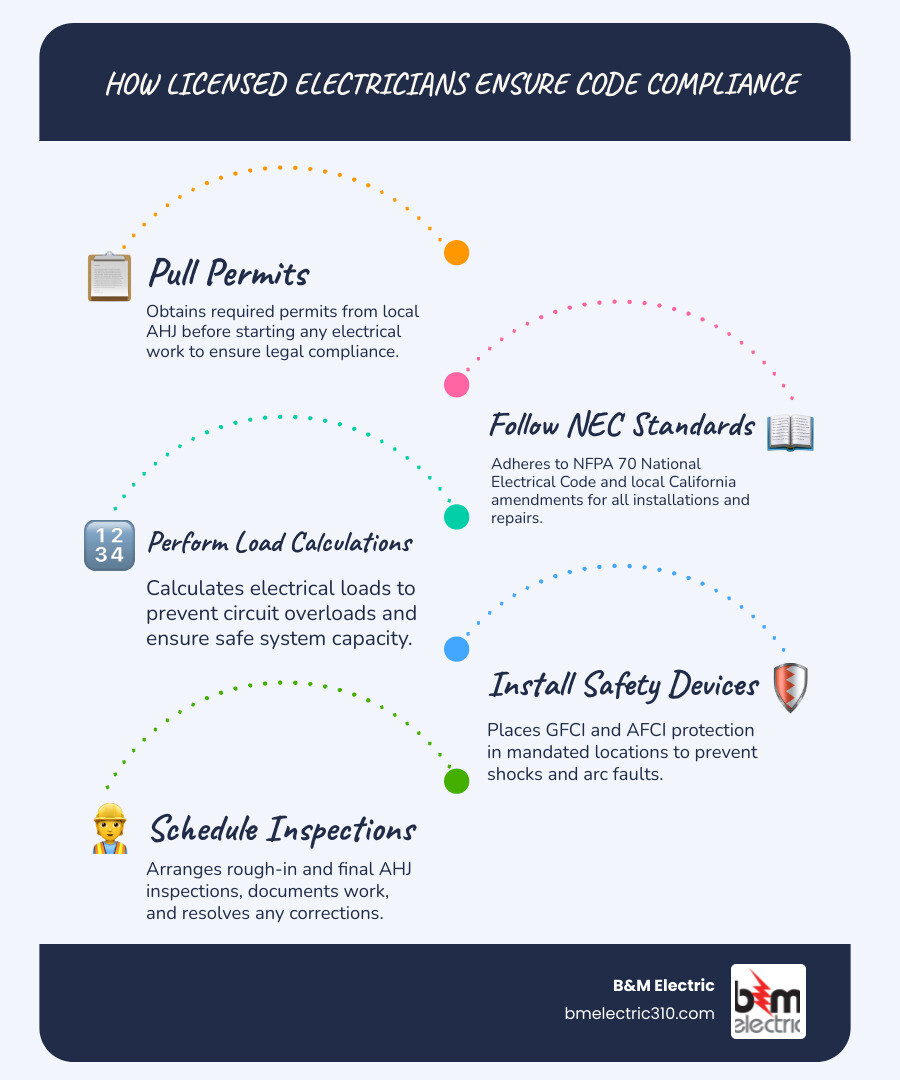
How a licensed electrician ensures code compliance comes down to a clear, repeatable process that protects your home, your family, and your investment. Here’s the short answer:
- Pulls the required permits before any work begins
- Follows NEC and local California code standards for every installation or repair
- Performs load calculations to prevent overloaded circuits
- Installs GFCI and AFCI protection in required locations
- Schedules inspections with the Authority Having Jurisdiction (AHJ)
- Documents all work and addresses any correction notices before closing walls
- Stays current with NEC updates and local amendments through ongoing training
Every year, roughly 51,000 home electrical fires break out across the United States, causing nearly 500 deaths, over 1,400 injuries, and around $1.3 billion in property damage. Many of these fires trace back to one root cause: electrical work that was never done to code.
For homeowners and business owners in Torrance and the South Bay, that risk is real. Electrical systems are easy to overlook when everything seems to be working fine. But hidden wiring problems, outdated panels, and missing safety devices don’t announce themselves – until something goes wrong.
That’s exactly why code compliance isn’t just a box to check. It’s the difference between a safe, reliable electrical system and one that’s quietly putting your property at risk.
How a Licensed Electrician Ensures Code Compliance Through Rigorous Standards

When we talk about “code,” we aren’t just talking about a set of boring suggestions. We’re talking about the National Electrical Code (NEC), also known as NFPA 70. This massive document—over 800 pages long—is the gold standard for electrical safety in the United States. In April 2026, we are operating under the most advanced versions of these safety protocols to ensure every wire, outlet, and breaker in your home is safe.
The importance of electrical inspections cannot be overstated. When we step into a home, we aren’t just looking for “lights that turn on.” We are looking for wiring integrity and performing precise load calculations. A load calculation ensures that your electrical panel can actually handle the modern demand for EV chargers, smart appliances, and high-end HVAC systems without overheating.
One of the most visible ways how a licensed electrician ensures code compliance is through the installation of specific safety devices. The code differentiates between different types of hazards, and a licensed professional knows exactly where each is required.
TABLE: GFCI vs. AFCI Protection Requirements
| Feature | GFCI (Ground Fault Circuit Interrupter) | AFCI (Arc Fault Circuit Interrupter) |
|---|---|---|
| Primary Goal | Prevents lethal electric shocks. | Prevents electrical fires. |
| How it Works | Detects imbalances in current (leaks to ground). | Detects dangerous “arcing” (sparking) in wires. |
| Required Locations | Kitchens, bathrooms, garages, outdoors, basements. | Bedrooms, living rooms, hallways, most dwelling areas. |
| Compliance Standard | NEC Article 210.8 | NEC Article 210.12 |
How a Licensed Electrician Ensures Code Compliance During New Installations
For new construction or major remodels in the South Bay, the process starts long before a single wire is pulled. We begin with permit acquisition. Working without a permit is a major red flag; a licensed electrician handles the paperwork to ensure the city knows exactly what is being built.
During the blueprint review, we calculate conduit fill (the number of wires that can safely fit in a pipe) and box volume (ensuring wires aren’t crushed inside an outlet box, which causes heat buildup). For our business clients, commercial electrical code compliance involves even stricter standards regarding heavy-duty equipment and emergency lighting systems. By following these AHJ (Authority Having Jurisdiction) requirements, we ensure the project passes its first inspection without costly delays.
How a Licensed Electrician Ensures Code Compliance for Older Homes
Many homes in Torrance were built decades ago, long before we had smartphones, let alone electric vehicles. Older systems often require electrical code violation repair to bring them up to modern safety standards.
We focus on several key areas for older properties:
- Panel Upgrades: Replacing old “Zinsco” or “Federal Pacific” panels that are notorious for failing to trip during a short circuit.
- Grounding and Bonding: Ensuring your electrical system has a safe path to the earth and that metal pipes are properly bonded to prevent them from becoming “live” during a fault.
- Aluminum Wiring Remediation: Safely addressing older aluminum wiring that can expand and contract, leading to loose connections and fires.
- Service Entrance Updates: Ensuring the wires coming from the utility pole to your meter are rated for your home’s actual power needs.
The Critical Role of the National Electrical Code (NEC) in 2026
The NEC is a living document, updated every three years by the National Fire Protection Association (NFPA). As of 2026, we are closely following the latest mandates that have significantly expanded safety requirements.
We know that electrical inspections prevent issues by catching violations of these new rules. For example, recent updates have mandated surge protection for entire dwelling units to protect sensitive electronics from grid spikes. There is also a much heavier emphasis on smart home integration and the safe installation of Level 2 EV charging stations.
By staying updated, we ensure your home isn’t just compliant with the rules of 1990, but is protected by the shock protection and arc-fault detection technology of today. These codes are designed to prevent the 47,000+ home fires that the NFPA reported from electrical failures in recent years.
Navigating Permits and the Authority Having Jurisdiction (AHJ)
In electrical work, the “AHJ” is usually your local building inspector. They are the final word on whether a job is safe. A major part of how a licensed electrician ensures code compliance is managing the relationship with these officials.
The process typically follows a specific sequence:
- Permit Issuance: We submit plans to the city of Torrance or the relevant South Bay municipality.
- Rough-in Inspection: Before the drywall goes up, the inspector checks the wiring, box placement, and grounding.
- Final Inspection: Once the walls are finished and the devices are installed, we perform a final walkthrough to ensure everything is energized safely.
For business owners, Torrance commercial electrical inspections are even more critical, as they are often a prerequisite for receiving a Certificate of Occupancy. If an inspector issues a correction notice, we address it immediately. This formal documentation is your proof that the work is legal and safe, which is vital for insurance and future property sales.
Consequences of Non-Compliance and DIY Risks
It might be tempting to save a few dollars by doing electrical work yourself or hiring an unlicensed “handyman.” However, the risks far outweigh the rewards. DIY electrical work is a leading cause of the 51,000 annual electrical fires mentioned earlier.
When work is not done to code, the consequences are severe:
- Fire and Shock Hazards: Incorrectly sized wires or missing GFCIs can lead to immediate physical danger.
- Insurance Claim Denials: If a fire starts due to unpermitted or non-compliant electrical work, your insurance company may refuse to pay for the damages.
- Resale Complications: When you go to sell your home, a home inspector will flag non-code-compliant work. This can kill a deal or force you to pay for expensive last-minute repairs.
- Legal Liability: If someone is injured on your property due to a code violation, you could be held personally liable.
We recommend a professional electrical code audit in Torrance if you suspect any part of your home was wired incorrectly. It’s a small investment that protects your property value and, more importantly, your life.
Frequently Asked Questions about Electrical Code Compliance
What is the difference between the NEC and local California codes?
While the National Electrical Code (NEC) provides the foundation, the California Electrical Code (Title 24, Part 3) often includes stricter amendments. California has specific requirements regarding energy efficiency and seismic safety. Local South Bay municipalities may also have their own specific rules regarding how meters must be placed or what types of conduit are required for outdoor wiring. A licensed local electrician knows these nuances, whereas a DIYer or an out-of-state contractor might not.
Can I sell my home if it has electrical code violations?
Technically, you can sell a home “as-is,” but you are legally required to disclose known electrical issues. Most buyers’ lenders will require a professional inspection, and if major violations are found, they may deny financing until the issues are fixed. Having a safety certification from a licensed electrician makes the selling process much smoother and protects your asking price.
How often should I have a code compliance audit?
We recommend a professional safety check every 3 to 5 years for most homes. However, if your home is more than 30 years old, or if you’ve recently noticed flickering lights, warm outlets, or breakers that trip frequently, you should schedule an audit sooner. Preventive maintenance is always cheaper than an emergency repair.
Conclusion
At B&M Electric, we’ve spent 50 years serving the Torrance and South Bay communities. We understand that your home is your sanctuary, and we treat every electrical system with the precision and care it deserves. Our dependable service with a personal touch ensures that your family stays safe and your property remains compliant with the ever-changing world of electrical codes.
Don’t leave your home’s safety to chance. Whether you’re planning a new installation, upgrading an older panel, or just want the peace of mind that comes with a professional audit, we are here to help. Contact a licensed electrician at B&M Electric today and let us provide the expert protection your home needs.